Renewable Energy Guide
Custom AI for Renewable Energy: Build, Buy, or Integrate?
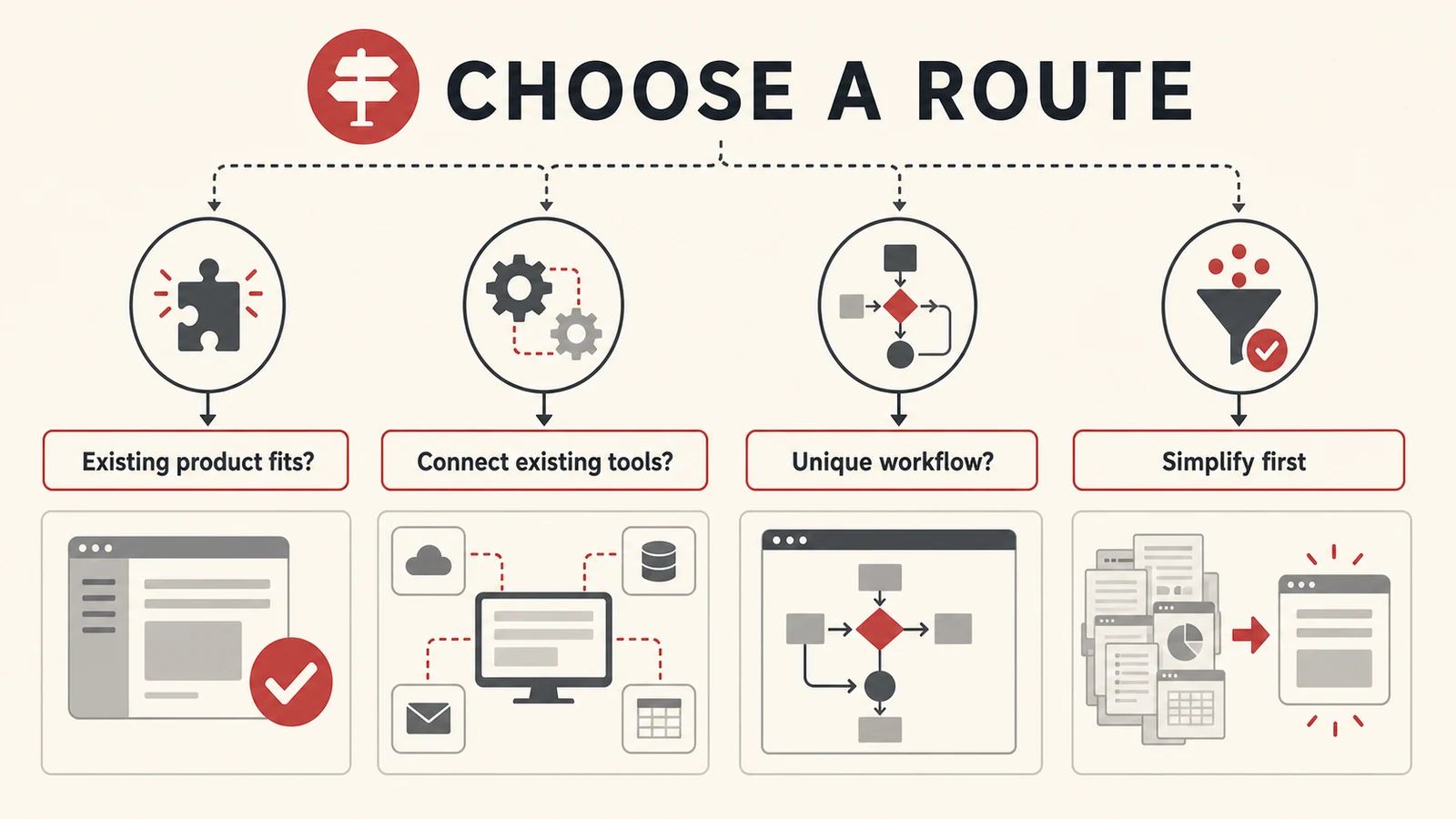
When a renewable-energy workflow is slow, the answer may already exist in a product your team uses. It may also sit in the gap between two systems, or depend on a process specific enough to justify a custom application.
Choosing between buying software, integrating existing tools, and building custom AI starts with the work itself. Define what must happen, who uses the result, which systems hold the information, and what a useful outcome looks like.
That gives you a practical basis for comparison. A product demonstration can then be judged against your actual requirements, and a custom development proposal can be tested against a clear scope.

Describe the job before discussing the technology
Choose one workflow and describe its beginning and end. “Use AI in operations” leaves too much open. “Prepare a reviewed service summary from completed wind maintenance records” identifies an input, an output, and a review step.
Collect examples of ordinary cases and difficult ones. Show where information is missing, where a person exercises judgement, and what happens when the process cannot continue.
Write down five things:
- The task and the people responsible for it.
- The inputs, their source, and the permission to use them.
- The required output and how its quality is checked.
- The decisions or exceptions that need a person.
- The systems and support arrangements the workflow must fit.
AI applications in energy span many different uses, from operational optimisation to information analysis. The IEA's sector analysis describes that breadth; your buying decision still needs to be grounded in a particular task. IEA analysis of AI for energy.
Buy when an existing product fits the work
A ready-made product is a strong candidate when it supports the essential process, handles the required data, and gives your team a manageable way to operate it.
Ask for a demonstration using representative examples. Check the awkward cases as well as the clean ones: revised customer information, missing fields, different equipment versions, and permission changes.
Buying may reduce the amount of software your business must maintain, but configuration, data preparation, training, and ongoing administration still need owners. Assess whether your team can work within the product's assumptions without creating extensive manual work around it.
A solar team already using a suitable design and proposal product may gain more by configuring its existing features than by rebuilding them. Verify what your subscription and supported interfaces actually include.
Integrate when the gap is between capable systems
Integration fits a workflow where the main tools already do their individual jobs but people repeatedly move information between them.
An illustrative example is a solar enquiry that is entered into a CRM, retyped into a design application, and copied again into a proposal record. A controlled connection could transfer approved information while retaining clear ownership of each field.
Check more than whether data can be sent. Establish what happens when a record changes, a system becomes unavailable, or the same update arrives twice. Decide who investigates failures and how staff see the current status.
Integration can include a small custom interface without requiring an entirely new system. The right scope may be a review screen, a document intake form, or a queue for unresolved handoffs.
Build when the workflow needs capabilities products do not provide
Custom development is worth considering when the essential requirements cannot be met reasonably through configuration or integration.
That might involve combining approved technical documents with project-specific permissions, supporting unusual review rules, or producing an output that several existing systems cannot assemble on their own.
Be precise about what makes the workflow different. “We are a renewable-energy company” is not sufficient by itself; many tasks are shared across industries. Identify the particular inputs, calculations, decision rules, or user needs that drive the custom scope.
For a fictional geothermal operator, the requirement might be an application that brings together site-specific documents and operational records for a reviewed planning summary. The distinctive need would lie in those sources, permissions, and outputs, rather than in a generic chat interface.
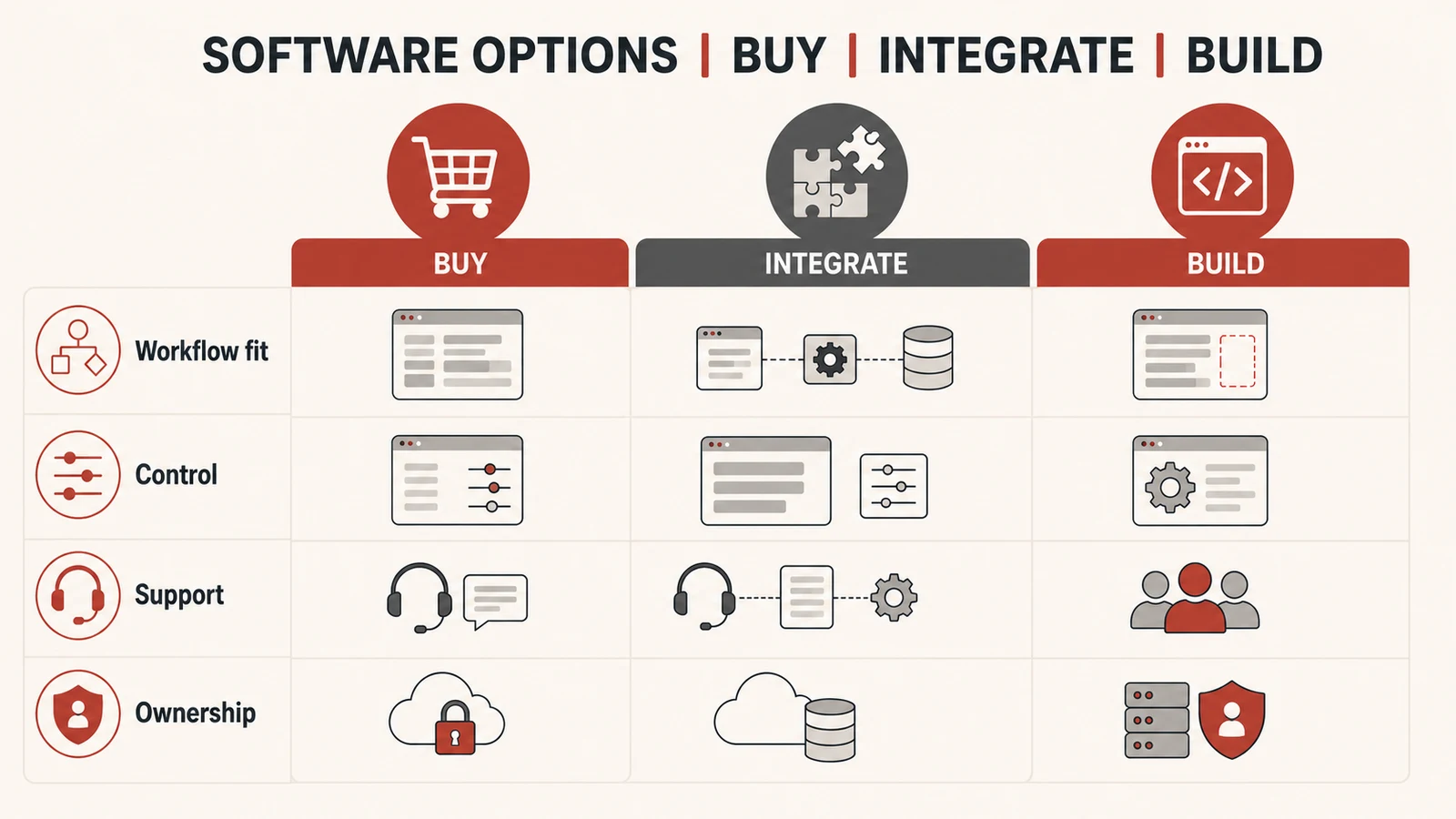
Compare the three routes against the same requirements
Use a shared evaluation so the comparison does not favour whichever supplier presents most convincingly.
| Decision area | Buy | Integrate | Build |
|---|---|---|---|
| Workflow fit | Test the product's supported process | Check the handoffs between existing processes | Define and test the required process explicitly |
| Data access | Confirm imports, exports, and permissions | Confirm supported interfaces and field ownership | Design the data model and access rules |
| Change | Assess configuration and vendor roadmap limits | Assess effects of changes in connected systems | Establish a controlled development process |
| Support | Define your responsibilities and the vendor's | Name an owner for the complete connection | Budget for application maintenance and user support |
| Exit | Check data export and transition options | Document dependencies and replacement routes | Agree ownership, documentation, and handover arrangements |
For an additional comparison of implementation approaches, see our AI platform versus agency guide.
Compare the cost of running the result
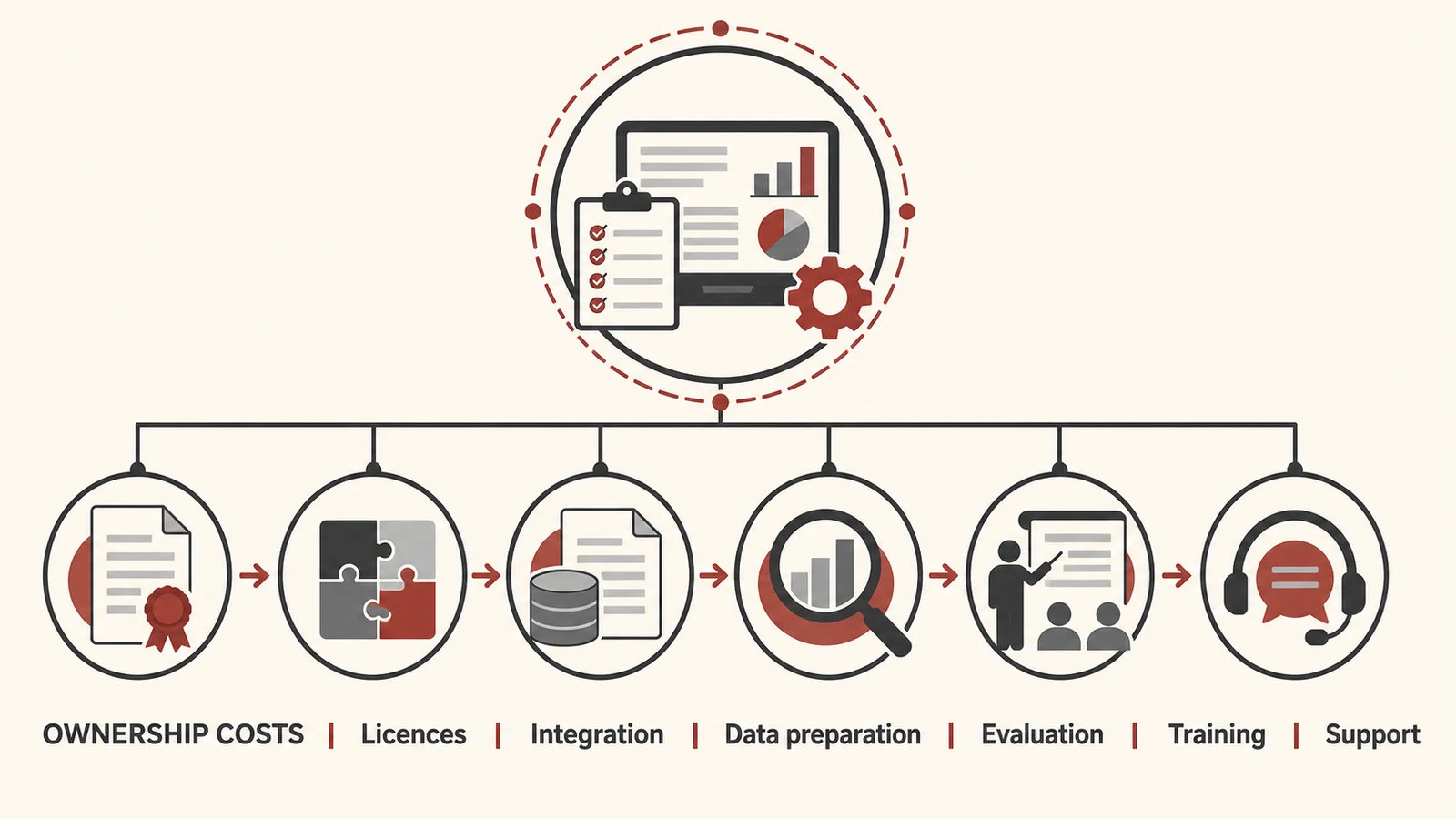
Include the work needed after the first version is available. Relevant cost components may include licences, usage charges, data preparation, integration, evaluation, training, monitoring, and support.
Keep the assumptions behind an estimate visible. User numbers, document volumes, response requirements, and exception rates can affect the work involved. A quote without those assumptions is difficult to compare with another proposal.
Ask what is included when a connected service changes or an AI output needs investigation. Clarify the response arrangements and who owns the underlying account or platform relationship.
Avoid comparing a product's subscription fee with a custom project's complete delivery cost. Compare the total work and ongoing responsibilities required to achieve the same outcome.
Prove one useful version before expanding
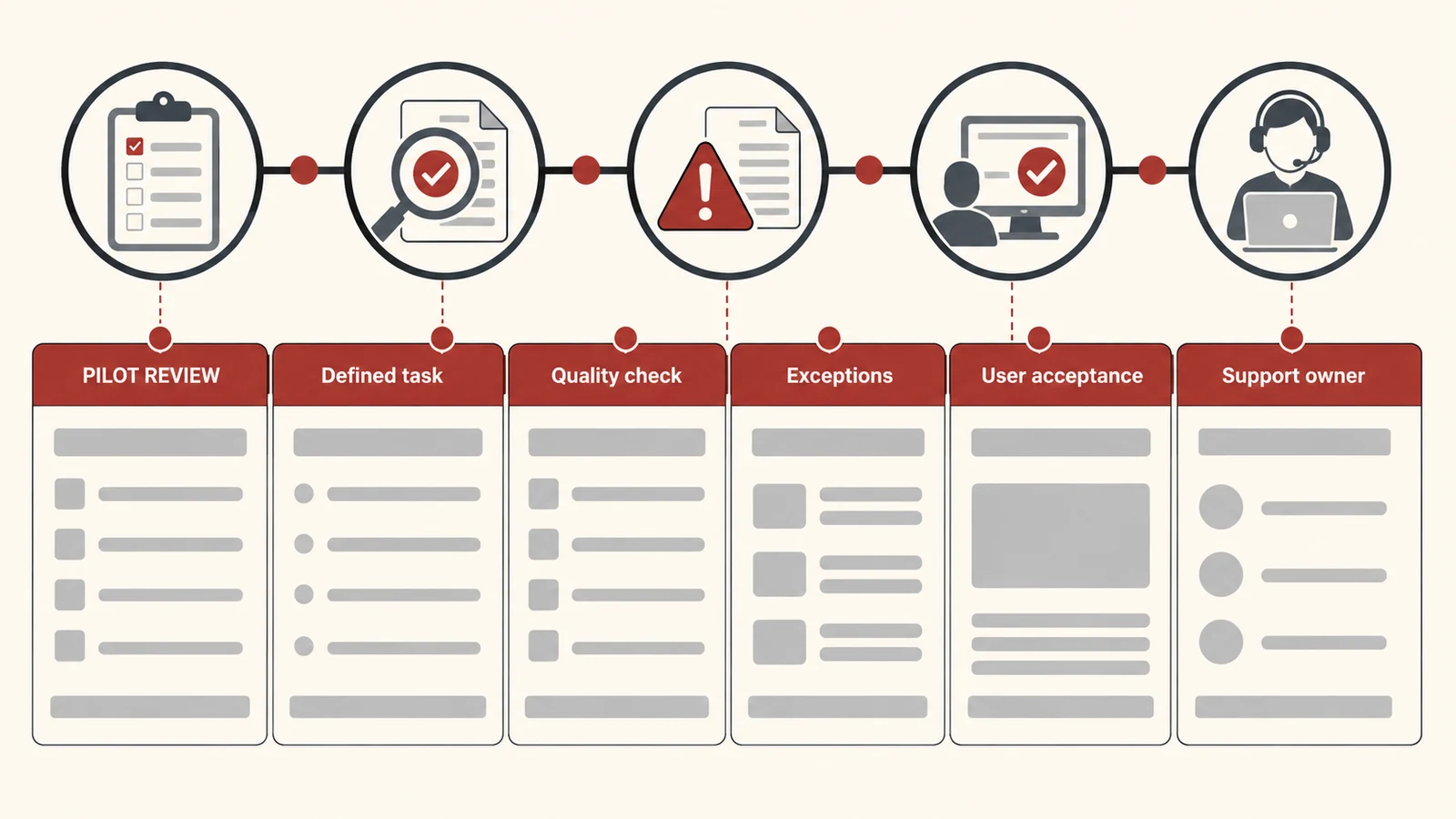
Define acceptance criteria before development or configuration begins. Agree how the team will assess output quality, exception handling, user fit, and operating effort.
Use an evaluation set that includes cases with insufficient evidence and situations where a user lacks permission. The application should demonstrate when it cannot complete a task and how a person can continue.
NIST's voluntary AI Risk Management Framework provides context for evaluating and managing AI systems over their lifecycle. Apply that approach to the decisions your application supports, including changes after launch. NIST AI Risk Management Framework.
Expand only after the users and owners can explain what works, what still needs attention, and how the application will be supported.
Common questions
Is custom AI always the more flexible option?
It can give you control over application behaviour, but that control brings maintenance and ownership responsibilities. Compare the flexibility you actually need with the work required to sustain it.
Can we combine all three routes?
Yes. A practical solution may use a commercial platform, supported integrations, and a small custom application for the remaining workflow. Define responsibility for the complete result.
What if our process is still changing?
Start with a readiness and opportunity review. A small trial or process change may clarify the requirements before a larger software commitment.
Choose the route that fits the work
Remova Tech provides AI application discovery, development, and ongoing support for renewable-energy teams. Tell us what the application must do, and we can help compare the practical routes around your data, users, and operating needs.