01
Find the right places
Start with a location or sales area and narrow the work to roofs that deserve a closer look.
Remova Tech delivery example · Solar operations
A practical workflow for turning location, roof, and opportunity information into a clearer proposal starting point for a human sales conversation.
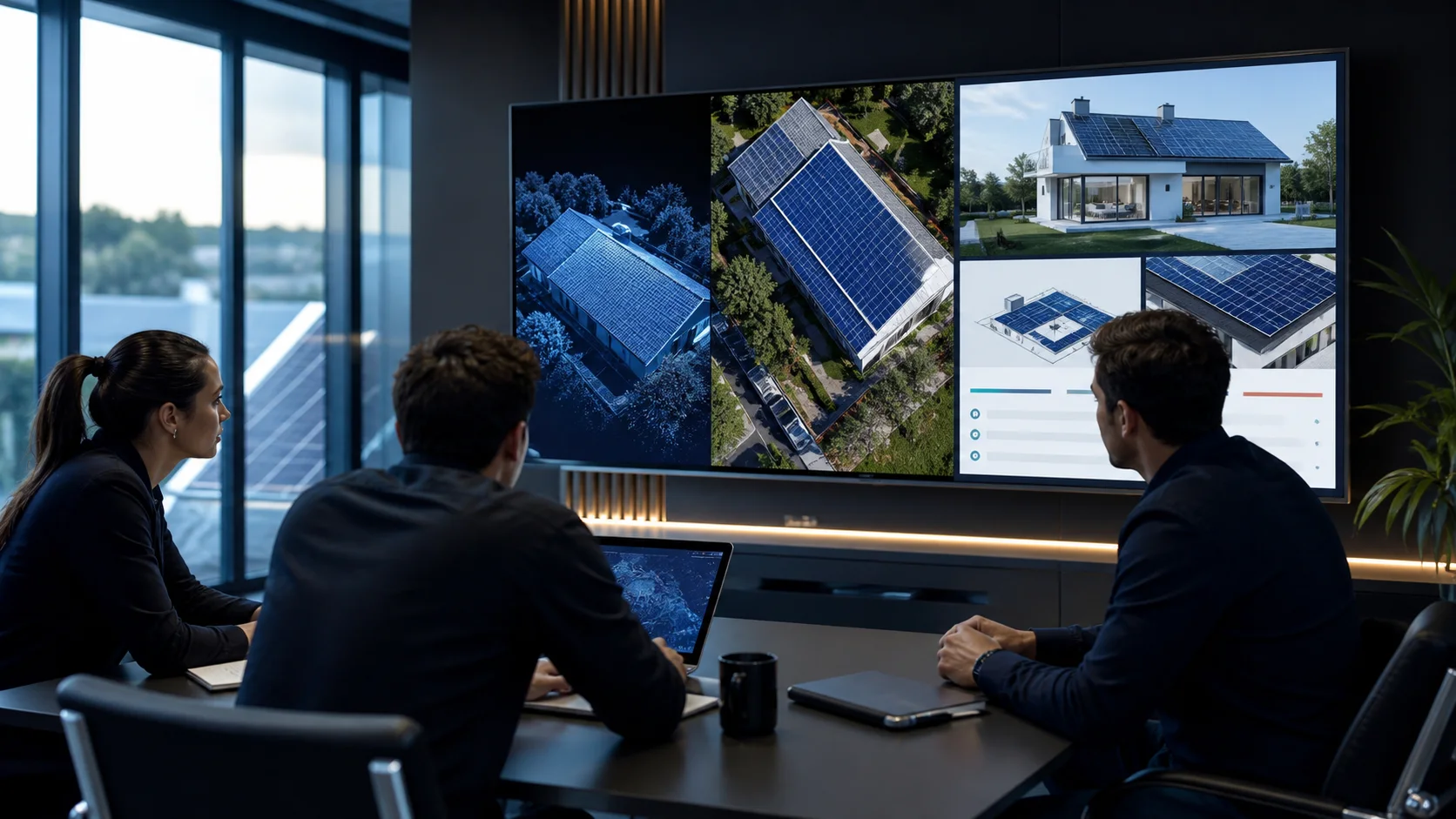
Starting point
Roof research, opportunity review, and proposal preparation were spread across too many manual steps.
Work delivered
A repeatable path from location and roof information to a reviewed visual proposal.
Useful result
Sales has a clearer starting point for the next conversation, with the important assumptions visible before the proposal moves forward.
The workflow
The work connected the research steps that matter to a solar offer. The output stayed structured, visual, and ready for a person to check before it was used.
What changed
Review-ready
proposal starting point
01
Start with a location or sales area and narrow the work to roofs that deserve a closer look.
02
Combine roof context, useful assumptions, and opportunity information in one reviewable view.
03
Turn the reviewed inputs into a proposal starting point that sales can refine for the customer.
04
A person checks the evidence, adjusts the assumptions, and decides whether the opportunity should move forward.
Supporting evidence
The original offer workflow was built around location research, roof screening, solar calculations, panel-layout previews, and a proposal pack that a person could review before it reached a customer.
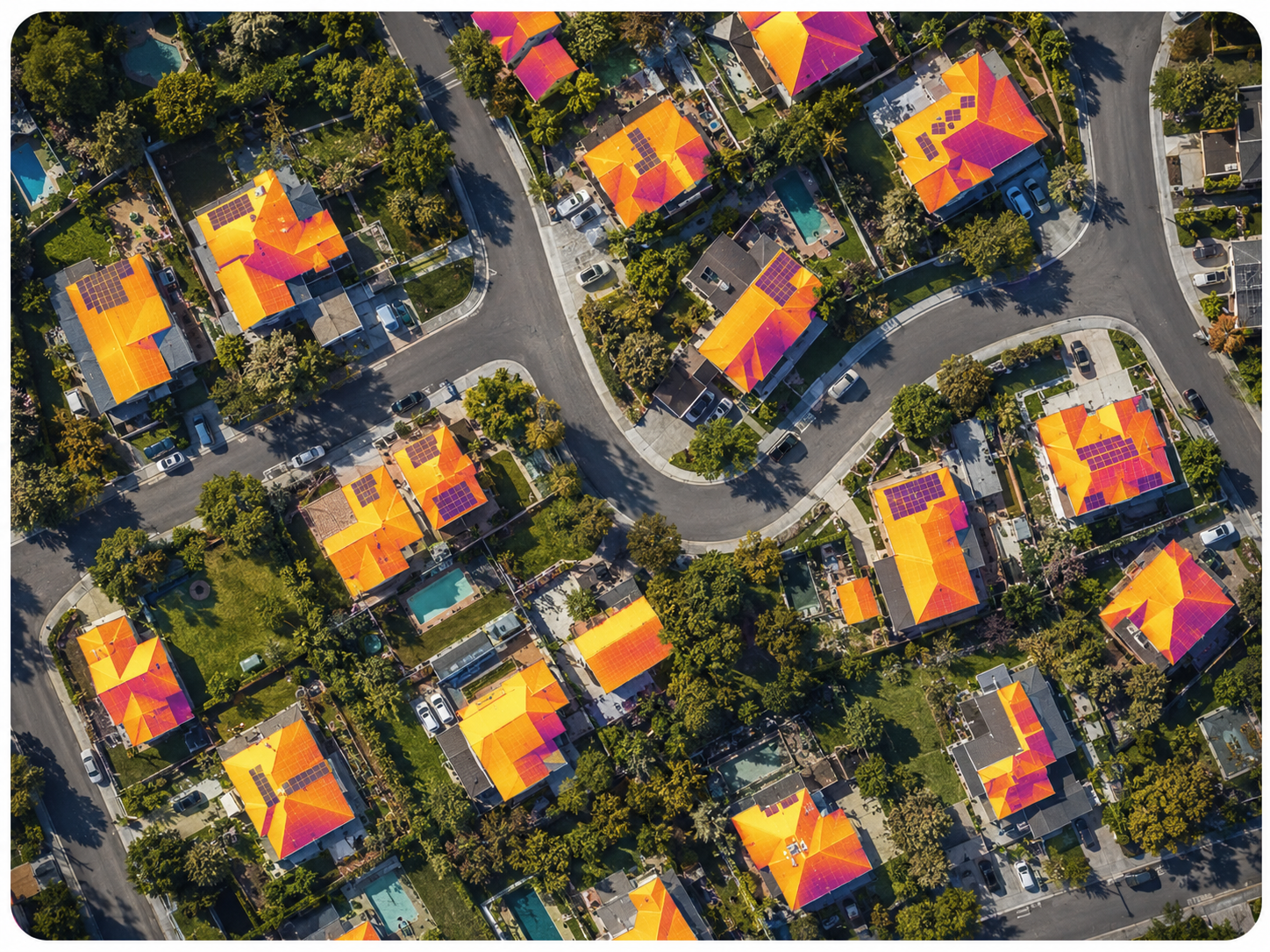
01
A selected town, postal area, or sales territory becomes the starting point for the batch.
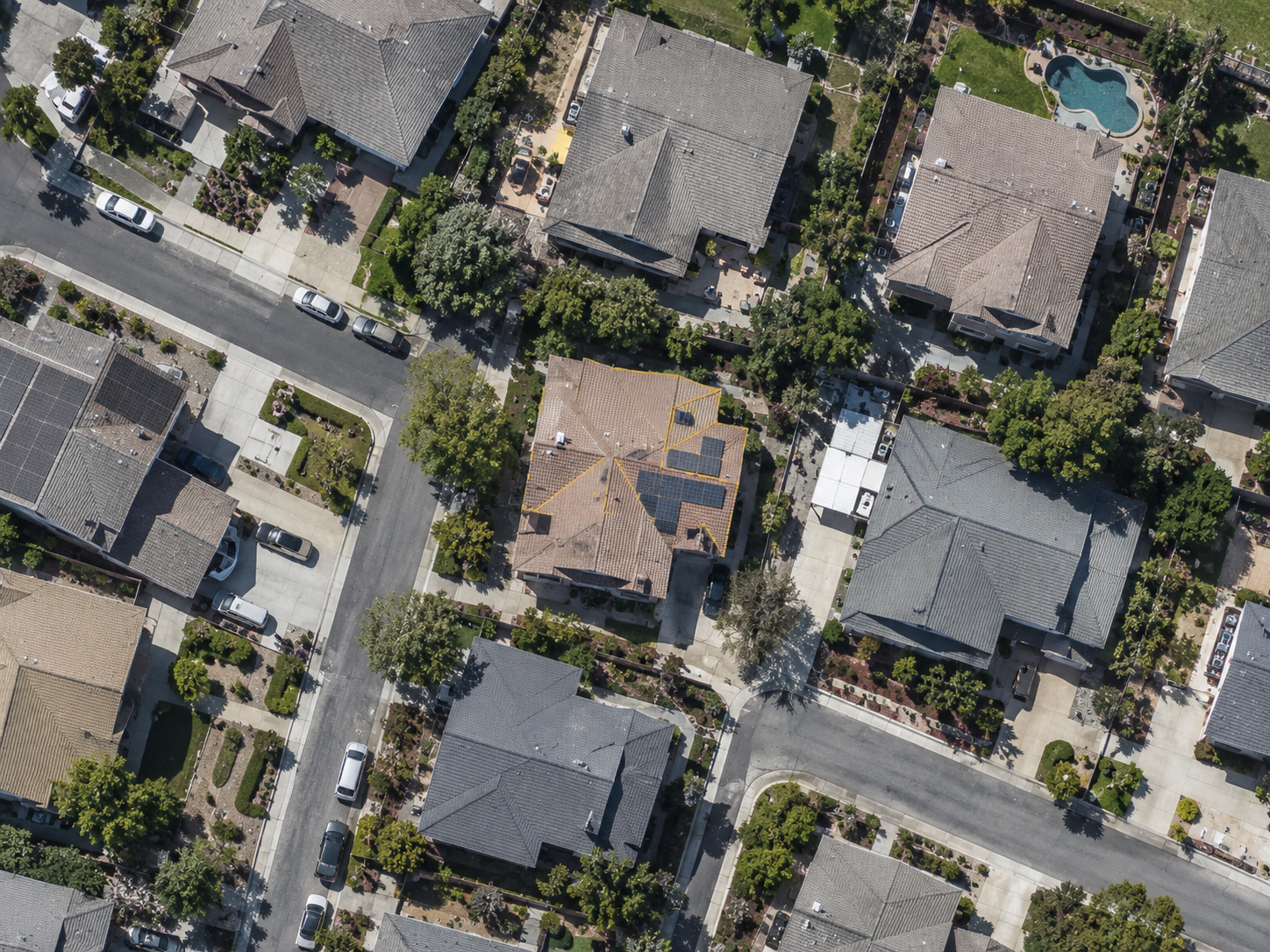
02
The workflow narrows the research to properties where a closer solar review is worth the effort.
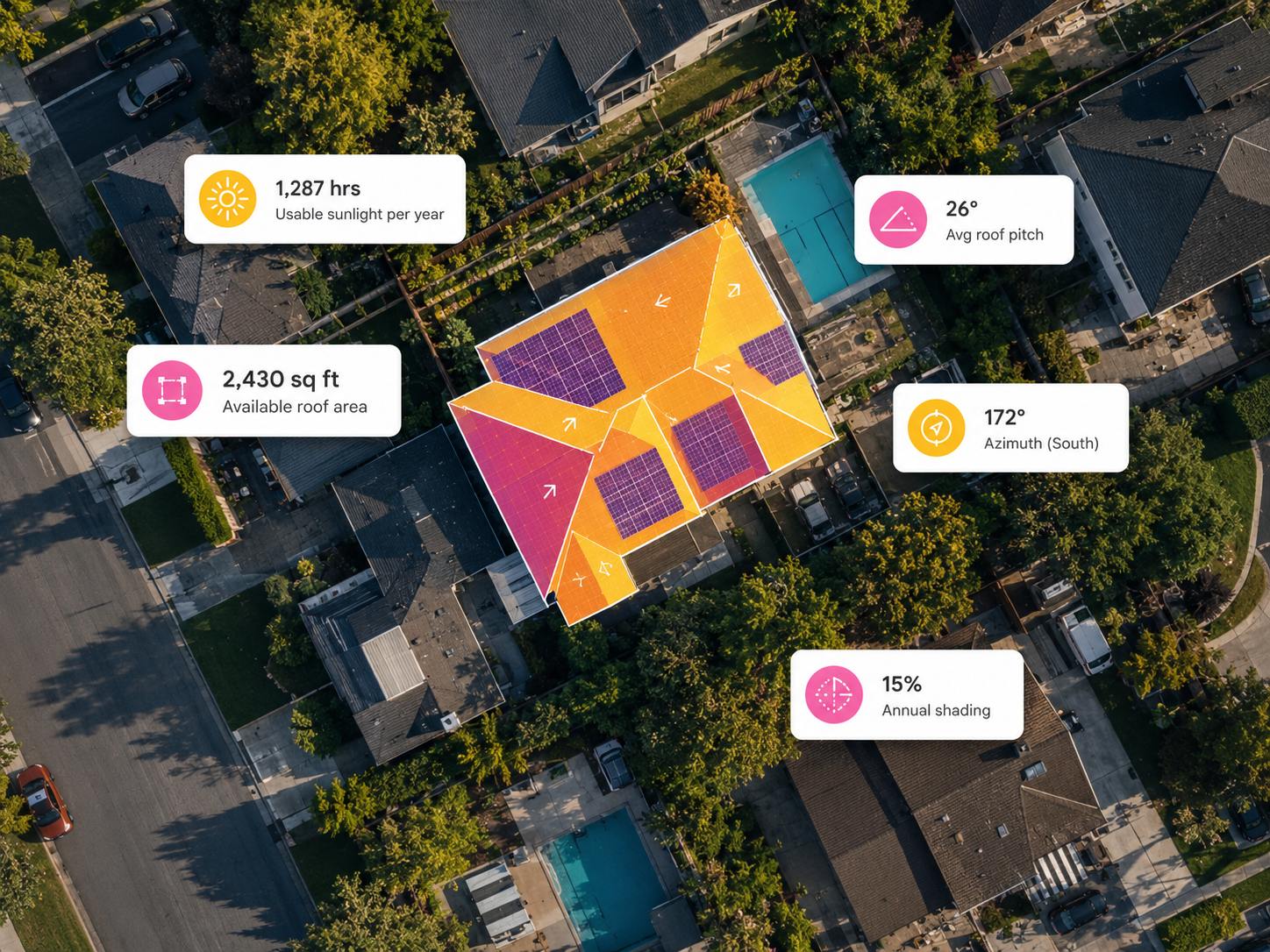
03
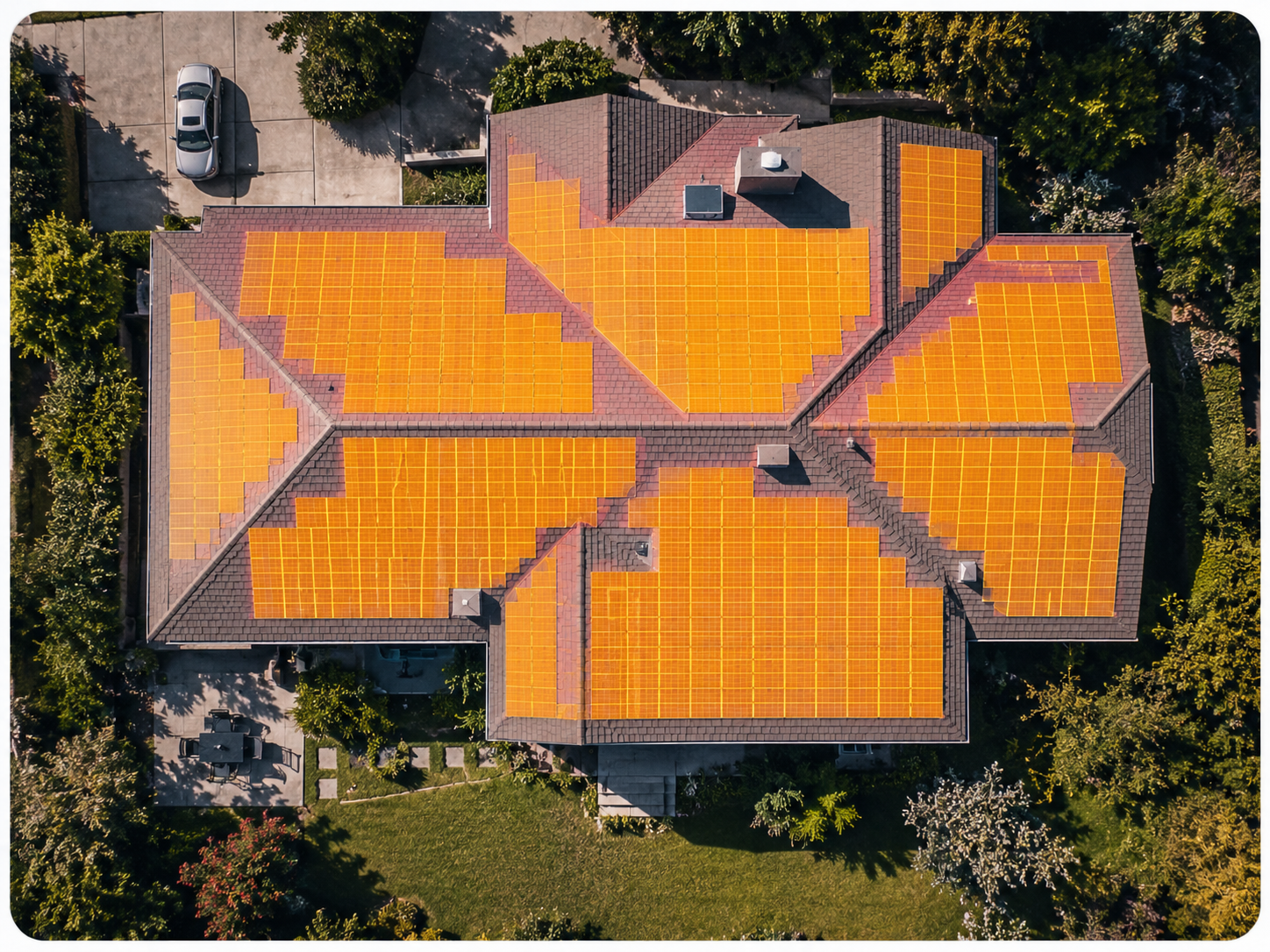
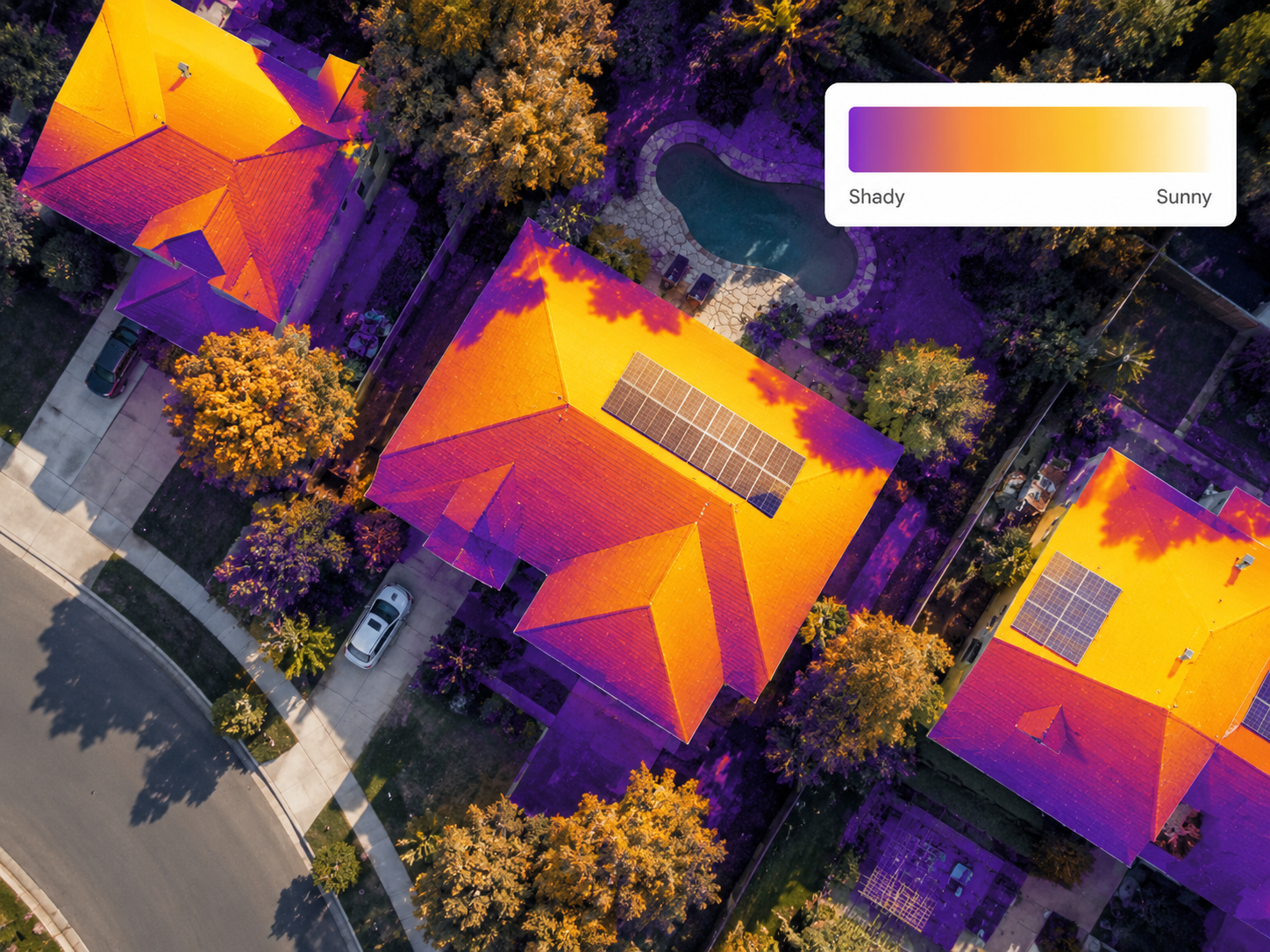
Roof area, pitch, orientation, sunlight, and shading give the reviewer useful context before an offer is prepared.
04
A visual PV preview makes the proposed installation easier for sales and the customer to understand.
05
Shading and other assumptions remain part of the review rather than disappearing behind a finished quote.
Example offer pack
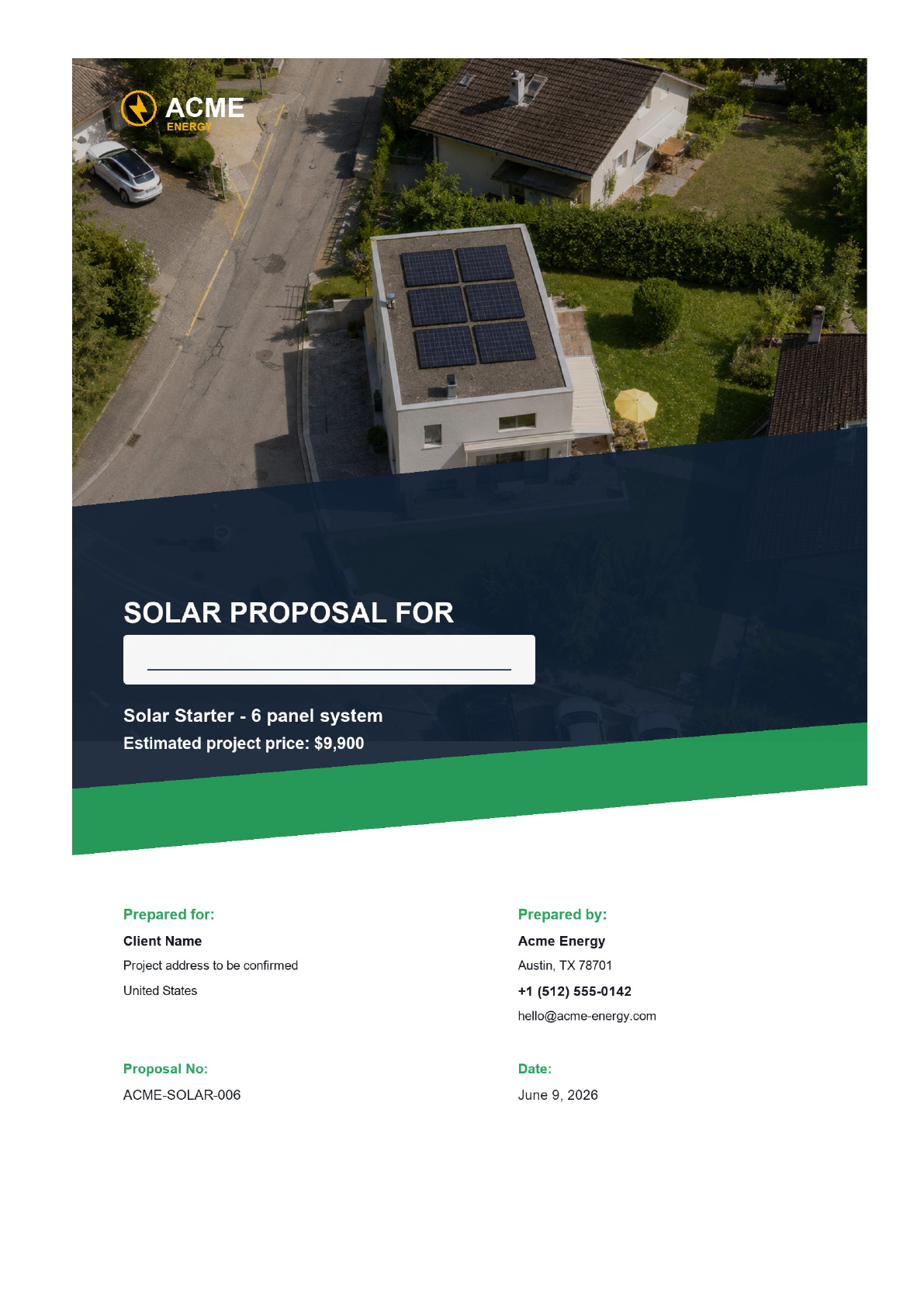
The sample offer shows how roof research, system sizing, visuals, and proposal formatting come together in one customer-facing pack.
Open the example offer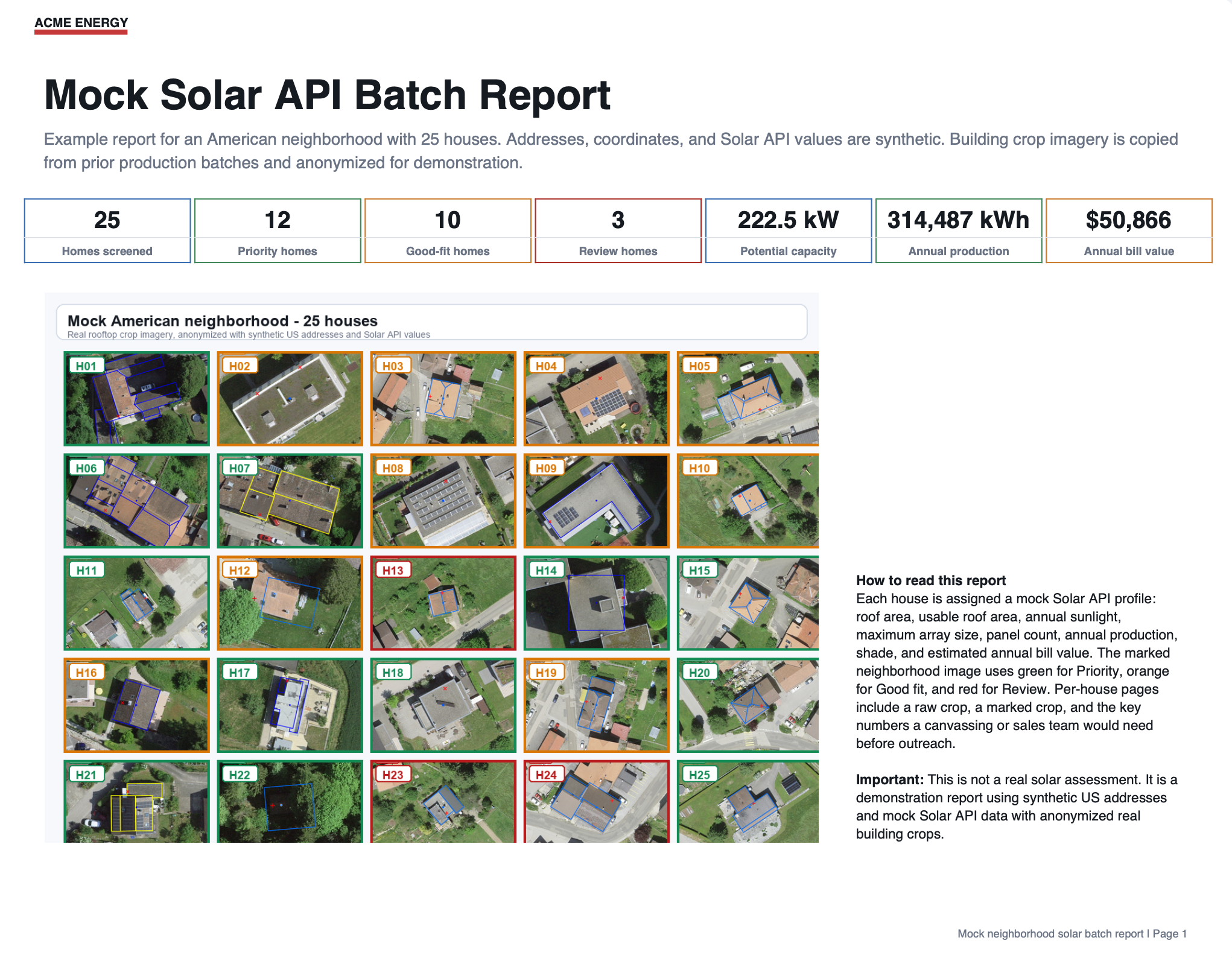
Batch review
A neighbourhood report keeps the selected addresses, roof context, and review status together so the next action is clear.
Open the batch reportWorkflow notes
A roof image is only an input. A dependable solar proposal workflow also needs a consistent address, a way to identify the right roof surface, assumptions about orientation and shading, an agreed panel and inverter catalogue, a pricing source, and a clear rule for when a person must check the result.
That is why the application is designed as a sequence rather than a single prediction. The team selects a location, reviews the available imagery, confirms the relevant roof area, and records the assumptions that will shape the scenario. The system can then prepare a visual starting point and a proposal draft that sales can inspect before it reaches a customer.
Human review remains important when imagery is old, trees or neighbouring buildings create shade, roof access is uncertain, or a project includes constraints that an aerial view cannot show. The workflow should make those uncertainties visible instead of presenting a clean-looking number without context.
Implementation normally begins with a small sales area or a known set of opportunities. We compare the current preparation time with the assisted path, check the quality of the proposal inputs, and note where users override or correct the result. Those observations guide the next refinement: better data capture, a clearer catalogue, a new review step, or a narrower scope.
Implementation path
A practical pilot begins with a defined territory, a small group of users, and a sample of real opportunities. We agree what a usable result contains: the location, the roof context, the assumptions, the scenario, the proposal fields, and the note that tells sales what still needs checking.
During the first weeks, the team records corrections rather than hiding them. A roof boundary may need adjustment. A customer requirement may not be represented in the catalogue. An image may be too old or too unclear. Those observations are valuable because they show which part of the workflow needs better evidence, a new rule, or a human decision.
Training should use the same examples that shaped the pilot. Users learn how to start an opportunity, how to explain an assumption, how to pause a result, and how to send feedback. Managers learn which measure is meaningful and which apparent speed gain is merely moving work to a later review.
At the end of the pilot, the team can choose a deliberate next step. Expand to another sales area if the inputs are consistent. Improve the catalogue or imagery if corrections are concentrated in one place. Add an approval queue if risk is higher than expected. Or stop if the workflow does not create enough value. A bounded test protects both budget and trust.
Handoff to delivery
When a proposal becomes a project, the workflow should pass along the assumptions and source evidence, not just a final number. Installation and engineering teams need to know what was observed, what was estimated, what the customer approved, and what remains open.
That continuity reduces rework and gives the next team a chance to correct the model before a small uncertainty becomes a project issue. Remova Tech can help define that handoff, connect the relevant systems, and support the people who will own the live process.
The practical difference
The point was not to remove judgement from the process. It was to reduce repeated research and preparation, make useful evidence easier to see, and give the team a stronger basis for the next conversation.
A defined location, roof context, and agreed assumptions.
A visual result that a person can check before it is used.
A proposal starting point that is easier for sales to pick up.
What to carry forward
Use the pattern as a starting point. Choose one workflow, one owner, and one measure that will tell you whether the change is worth keeping.
Context and limits
Remova Tech delivery example based on a practical workflow pattern. No client-identifying information or unsupported performance claim is published here.
Have a similar workflow?
Bring the repeated work, uncertain handoff, or daily bottleneck. We will help you decide what to improve and how to keep a person accountable for the result.