India’s Draft Solar Pump-Controller Standards: The Next Step for Rural Solar Automation
India’s draft solar pump-controller specification sounds like a hardware update. In practice, it may decide how reliably rural solar irrigation systems can be monitored, repaired, and improved.
Focus
Rural solar automation
Written for
Solar pump manufacturers, rural-energy programmes, agricultural cooperatives, service providers, and distributed-energy teams
Editorial standard
Facts, status, and practical implications
At a glance
- India’s Ministry of New and Renewable Energy listed an invitation for comments on draft solar pump-controller specifications on August 12, 2026.
- The notice is a draft consultation, not a final mandate.
- The practical story is interoperability, remote visibility, maintenance, and whether farmers can get help when a controller fails.
The controller is the part people forget
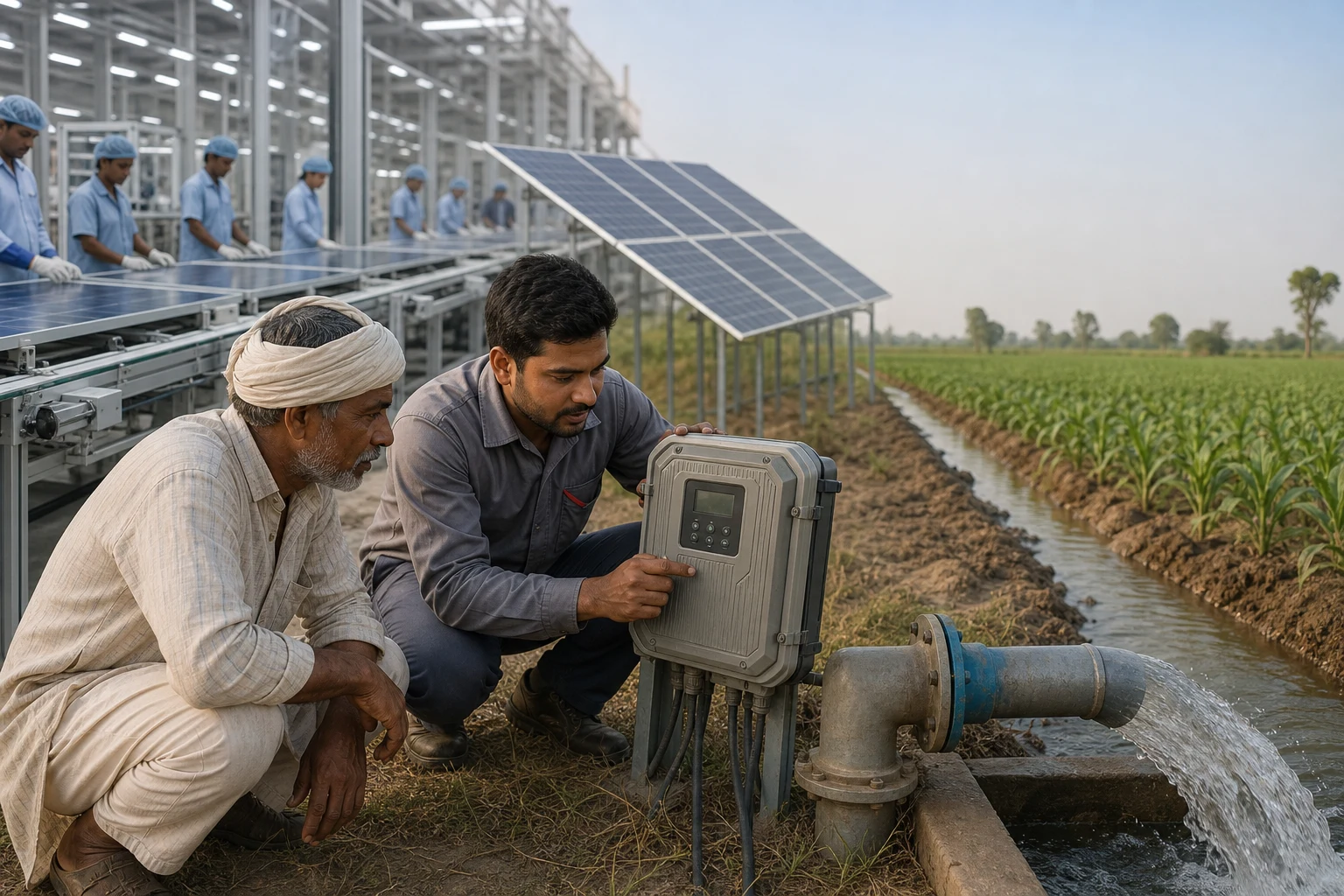
Solar panels and pumps are easy to see in a field. The controller is less visible, but it is the part that turns electricity into a useful operating decision. It regulates how the pump starts, responds to available power, protects equipment, and communicates with any monitoring system. India’s Ministry of New and Renewable Energy has invited comments on draft specifications for solar pump controllers, making a small component part of a much larger rural-energy story.
The notice is a draft consultation, not a final standard. That distinction should stay in every article about it. The useful opportunity is to ask what a good specification can make possible: safer equipment, clearer testing, easier replacement, and a better service record after installation. A controller that works on day one but cannot be diagnosed a year later is not a complete solution.
Reliability is an information problem too
A pump in a rural area may be maintained by a local technician who did not install the original system. Faults can be caused by wiring, water conditions, a sensor, a motor, a controller setting, or a change in the available solar supply. Without consistent status information, the first response is often a visit to inspect everything. That costs time and can leave a farmer without irrigation during an important period.
A controller specification can improve that situation if it encourages clear signals, predictable interfaces, and usable diagnostic records. Remote monitoring is not the same as remote control, and it should not be sold as magic. The practical aim is to know whether the system is producing, what fault occurred, when it occurred, and what a technician should check next.
Where automation can help without taking over
Once reliable controller data exists, simple automation becomes possible. A service team can receive an alert when a pump has stopped repeatedly. A programme manager can see which installations need inspection. A technician can review recent readings before travelling to a site. A farmer can receive a plain-language message instead of a technical error code. These are modest improvements, but they can add up across thousands of distributed systems.
AI may help prioritise maintenance or spot a pattern that is easy to miss across a large fleet. It should not make a high-stakes equipment decision without a clear fallback. A model that labels a pump as healthy because it has sent one recent signal can be misleading. The workflow should combine sensor data, service history, weather, and a human check when the evidence is incomplete.
Interoperability determines whether the programme scales
Rural solar programmes often involve public agencies, vendors, distributors, service contractors, banks, and local organisations. If every controller uses a different data format, the service layer becomes expensive and fragmented. A draft specification can help by defining the minimum information that must be available and the tests that show the device meets it. It can also reduce dependence on one supplier when equipment needs to be replaced.
The right level of standardisation matters. A specification should protect safety and interoperability without preventing sensible innovation. It should leave room for different communications networks, local operating conditions, and future software improvements. The people writing the standard need feedback from the field, not only from manufacturers.
What to ask as the draft develops
The most useful questions are practical. What happens when connectivity is poor? Which measurements must be stored locally? How are firmware changes controlled? Can a technician replace a controller without losing the service history? What does a farmer see when the pump is unavailable? How are installers trained, and who is responsible for responding to an alert? Those answers will tell us more about the standard’s value than a list of technical acronyms.
India’s draft consultation is a good example of why renewable-energy news should look below the headline technology. Solar pumps are not only panels and capacity targets. They are machines used by people who need water at the right time. Better control data, clear service responsibility, and sensible automation can make that promise more dependable.
The consultation is also a chance to protect the economics of maintenance. A controller that reports a useful fault early can save a long trip, a damaged motor, or a missed irrigation window. A replacement part that works with the existing service record can save a programme from starting again at every repair. Those benefits will only appear if the specification is written for field conditions, translated into practical tests, and supported by a service network that can act on the information.
Sources and status
This is news analysis, not legal or financial advice. Proposals, forecasts, draft standards, and company statements can change. Check the linked primary sources and the publication date before relying on a detail.
From news to useful action
Need to make an energy workflow easier to run?
Remova Tech helps teams review opportunities, connect reliable data, and introduce automation with clear ownership and human control.