Renewable Energy Guide
Renewable Energy Asset Reporting: Automate Reports with Traceable Data
The recurring asset report should help people understand what happened and what needs attention. Yet preparing it can become an exercise in reconciling exports, checking dates, chasing maintenance updates, and rewriting explanations from the previous month.
Renewable energy asset reporting automation connects source information to a repeatable reporting process. It can assemble approved figures, identify missing records, and help draft commentary. The result is useful when every material statement can be traced to an agreed source and reporting definition.
Before automating the narrative, decide who uses the report and what decisions it supports. An operations supervisor, asset owner, and commercial manager may need different views of the same underlying information.

Start with one report and its decisions
Choose a report that is prepared frequently enough for the team to recognise its recurring problems. Review the last few editions with the people who compile and use it.
Identify which sections drive an action. A list of open maintenance items might trigger follow-up. A data-quality note might prevent someone from relying on an incomplete comparison. A record of an unresolved outage might need a named owner.
Then identify the work behind each section: where the inputs come from, who checks them, and which parts are recreated manually.
Removing an unused section may be more valuable than automating it. Keep the report focused on the questions its readers actually need answered.
Agree on definitions before connecting data
Two systems can contain accurate figures that describe different things. One may use a calendar month, another a billing period. One may record the start of an event when an alarm occurs, another when someone acknowledges it.
Create a reporting dictionary that states what each field means.
| Report item | Definition to agree |
|---|---|
| Reporting period | Start, end, time zone, and treatment of boundary events |
| Asset identity | The stable identifier used across source systems |
| Energy figure | Measurement point, unit, period, and source |
| Availability measure | Included time, exclusions, calculation method, and owner |
| Maintenance status | What counts as open, completed, or awaiting confirmation |
| Commentary | Which evidence supports each operational explanation |
Assign responsibility for changing these definitions. If a calculation changes, record its version so a comparison with last year's report remains understandable.
Create a source map for the report
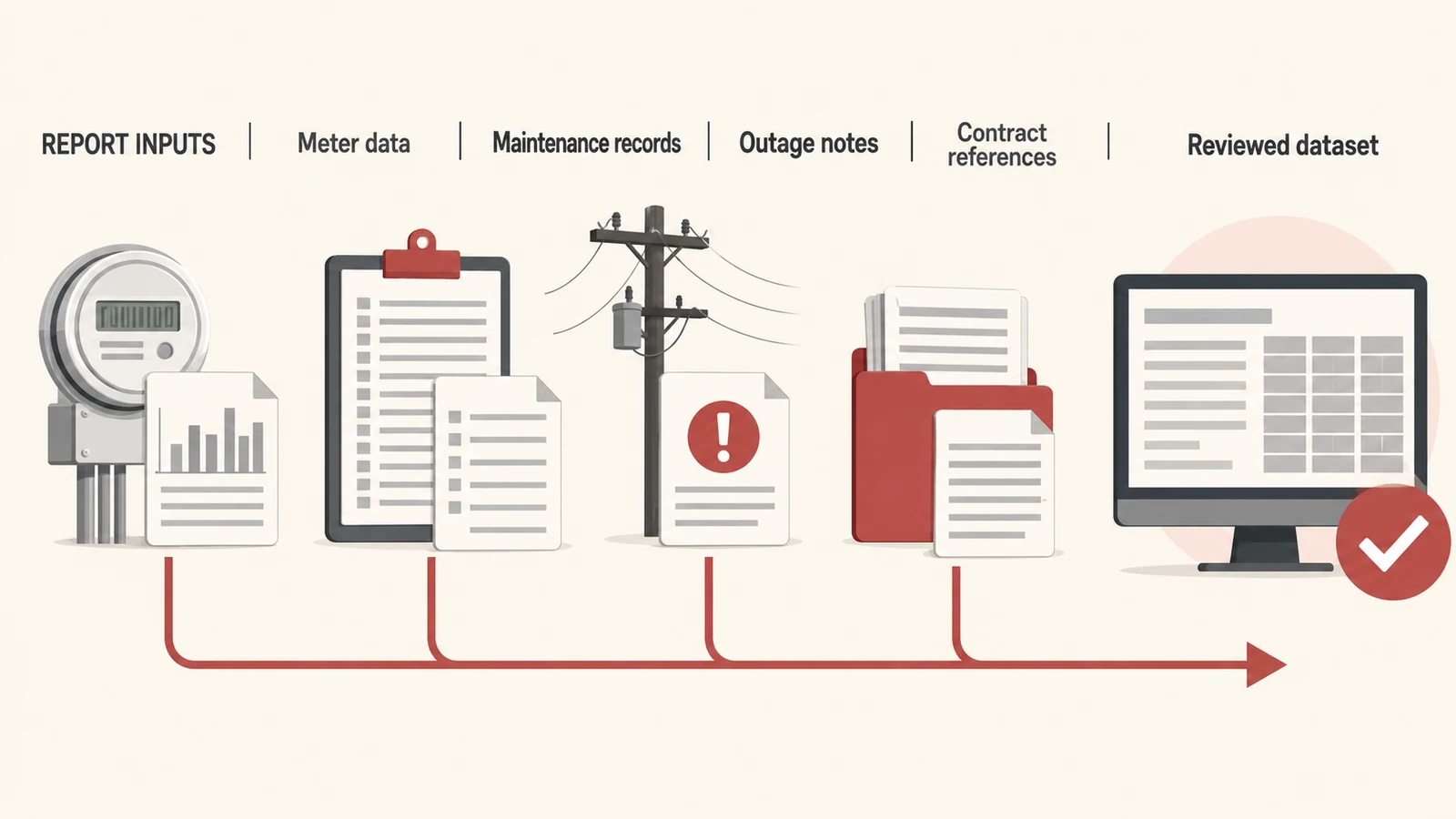
List the source behind each section, including who controls access and how updates arrive. Useful inputs may include metering exports, maintenance records, outage notes, and approved commercial reference data.
Within solar operations, industry guidance recognises the importance of data management. SolarPower Europe's 2025 O&M guidance announcement identifies data management among its revised areas, while its Digitalisation workstream connects operational datasets with asset management. These provide solar-specific context; workflows for other technologies need their own operating definitions. SolarPower Europe O&M guidance, Digitalisation workstream.
Keep imported data separate from approved reporting data. A new file arriving should not silently replace a reviewed input without recording the change.
For each reporting run, preserve the source versions, extraction time, transformation rules, and final approved output. That makes a correction easier to investigate later.
Check gaps before generating comparisons
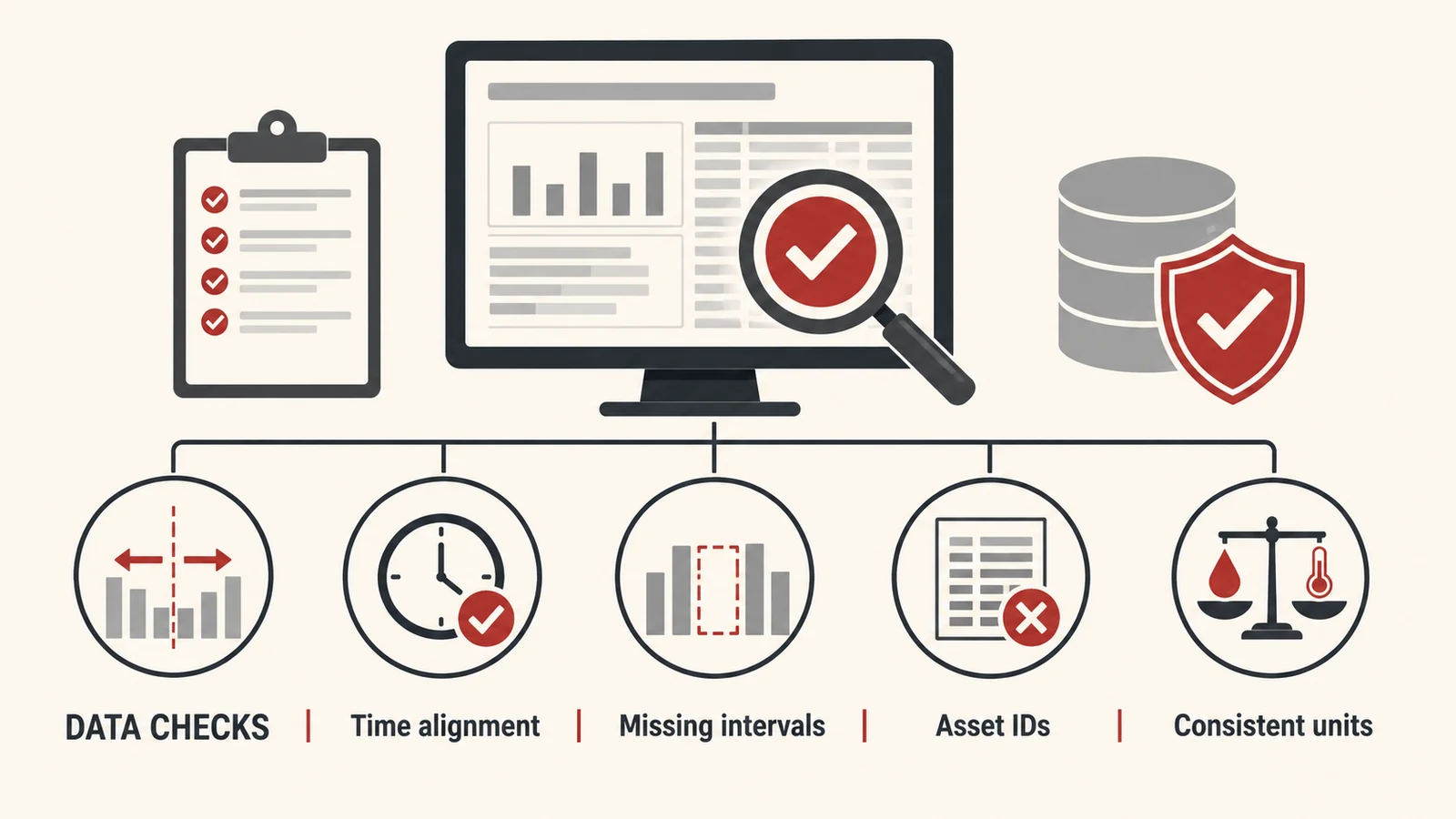
Validate timestamps, units, identifiers, duplicate records, and expected coverage. Flag gaps where a dataset should contain information but does not.
Imagine a fictional wind portfolio where one site's export is missing several intervals. The reporting workflow should identify the incomplete period and explain which comparisons are affected. It should not quietly substitute zero production or present the portfolio total as complete.
An estimate may sometimes be part of an agreed reporting method. If so, label it, record the method, and keep the estimated portion distinguishable from measured data.
Treat late corrections consistently. Decide whether a corrected source requires a revised report, a note in the next period, or another documented action. Readers need to know when a figure they previously received has changed.
Let AI draft commentary from approved evidence
Once the inputs are checked, an AI application can help turn structured findings into readable explanations. Give it a defined evidence set and a clear scope for what it may say.
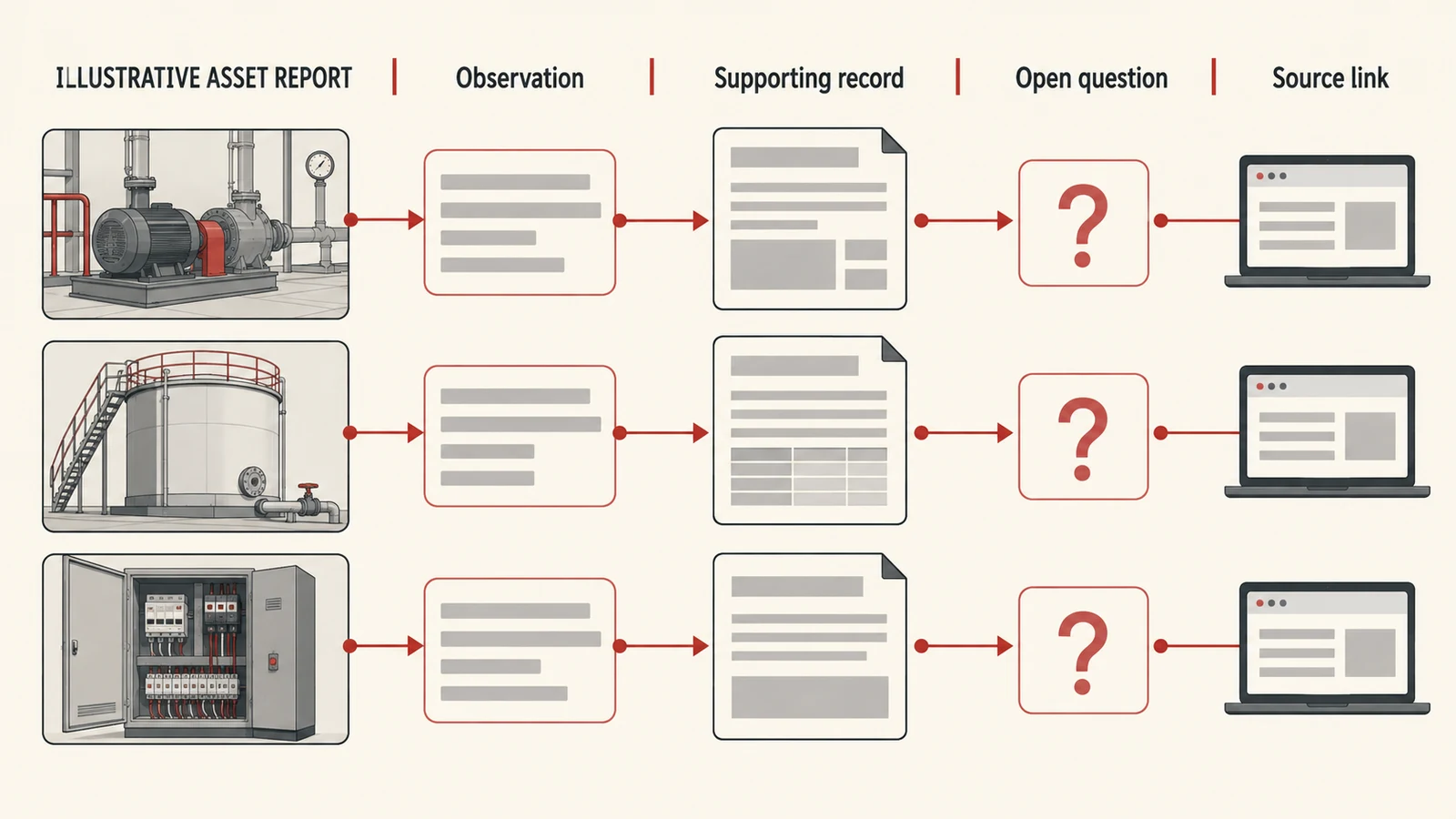
Separate three types of statement:
- Observation: What the approved data shows.
- Documented explanation: What a verified event or maintenance record establishes.
- Open question: What needs further investigation.
If a site's output is lower than a comparison period, the application should not attribute the difference to weather or equipment condition without supporting evidence. It can report the observed difference and flag the missing explanation.
Ask the system to attach a source reference to each material statement. Review the reference for relevance rather than assuming that a link makes the explanation valid.
Build review into the reporting timetable
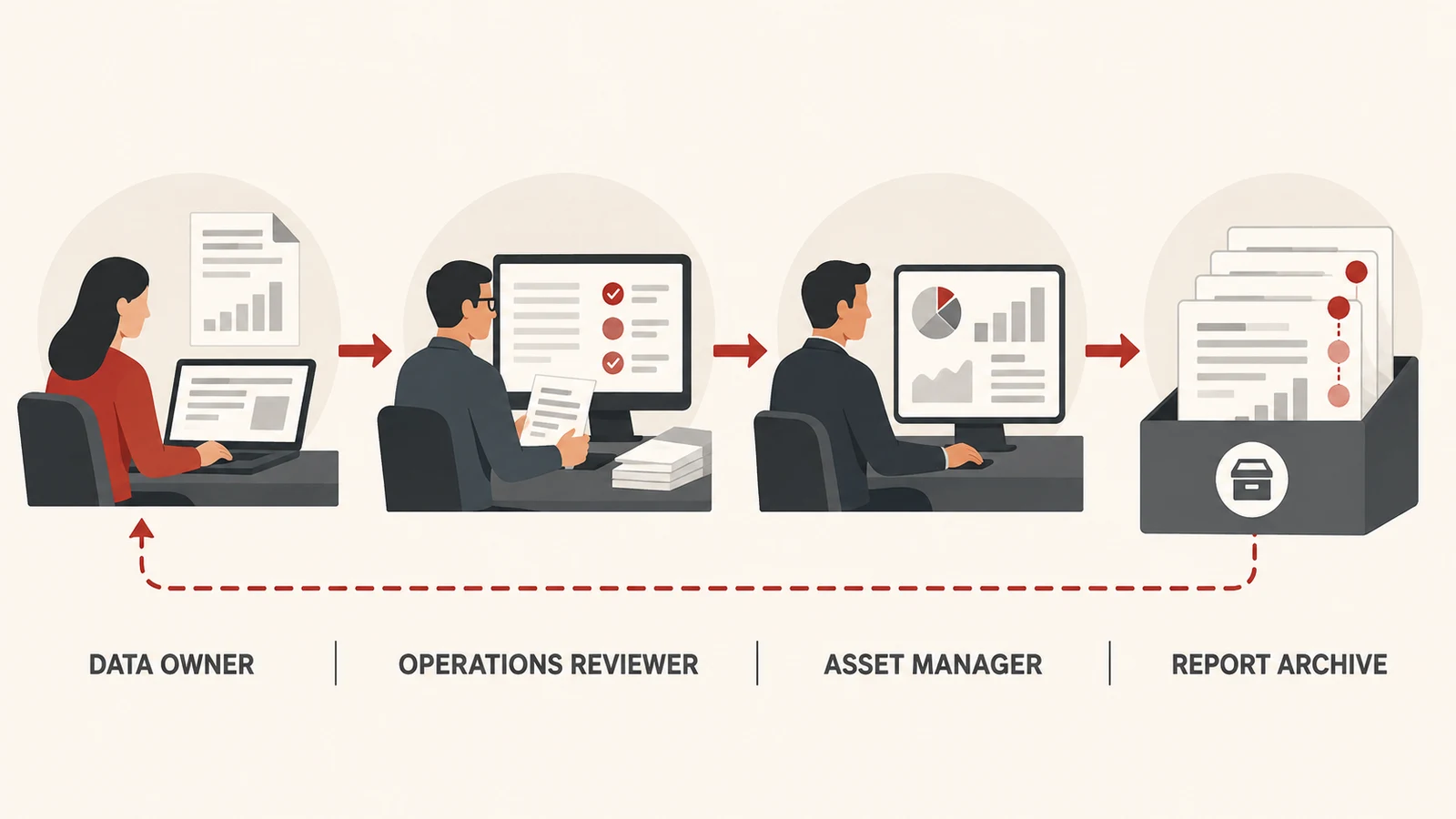
Assign owners for source quality, operational interpretation, and release. These may be different people, especially across a portfolio.
The reviewer should see changes from the previous draft, unresolved exceptions, and the evidence behind the commentary. Avoid making them recheck every cell because the workflow cannot explain what changed.
Define the release policy for missing information. Some gaps may allow publication with a clear note; others may require the report to wait. Establish that policy with the people accountable for the report's use.
For the wider process behind a reliable report, see our workflow review guide.
Prove the process over a complete reporting cycle
Run the proposed workflow alongside the existing report for a representative period. Include a late source update, an incomplete dataset, and a corrected maintenance record in the evaluation.
Compare preparation effort, reconciliation effort, reviewer changes, and unresolved data issues. Check whether someone unfamiliar with the reporting run can trace a final statement back to its source.
When a result differs from the manual report, investigate the definition and source before deciding which version is correct. Automation can expose an existing inconsistency as well as introduce a new one.
Common questions
Do all our systems need to be replaced?
No. A first version can work from controlled exports if they contain the required information. Direct integrations can follow when their value and maintenance responsibilities are clear.
Can one workflow serve solar, wind, and hydro assets?
It can share infrastructure and reporting controls, but the measurements, operating context, and performance definitions need to reflect each technology. Avoid forcing unlike assets into an unexplained common metric.
Does AI need to calculate the report's figures?
Reproducible calculations should use agreed rules. AI can assist with extraction, classification, and narrative preparation while those calculations remain independently checkable.
Make the next reporting cycle easier to explain
Remova Tech develops AI applications for operational data and reporting, supported by clear ownership and technology resilience practices. Show us one recurring asset report and the sources behind it, and we can help identify where automation would be useful.