Renewable Energy Guide
Solar Proposal Automation: From Roof Data to a Reviewed Quote
A solar proposal can look finished while still containing an old equipment price, an unverified roof assumption, or a customer detail copied from the wrong record. Producing the document faster helps only when the information behind it is dependable.
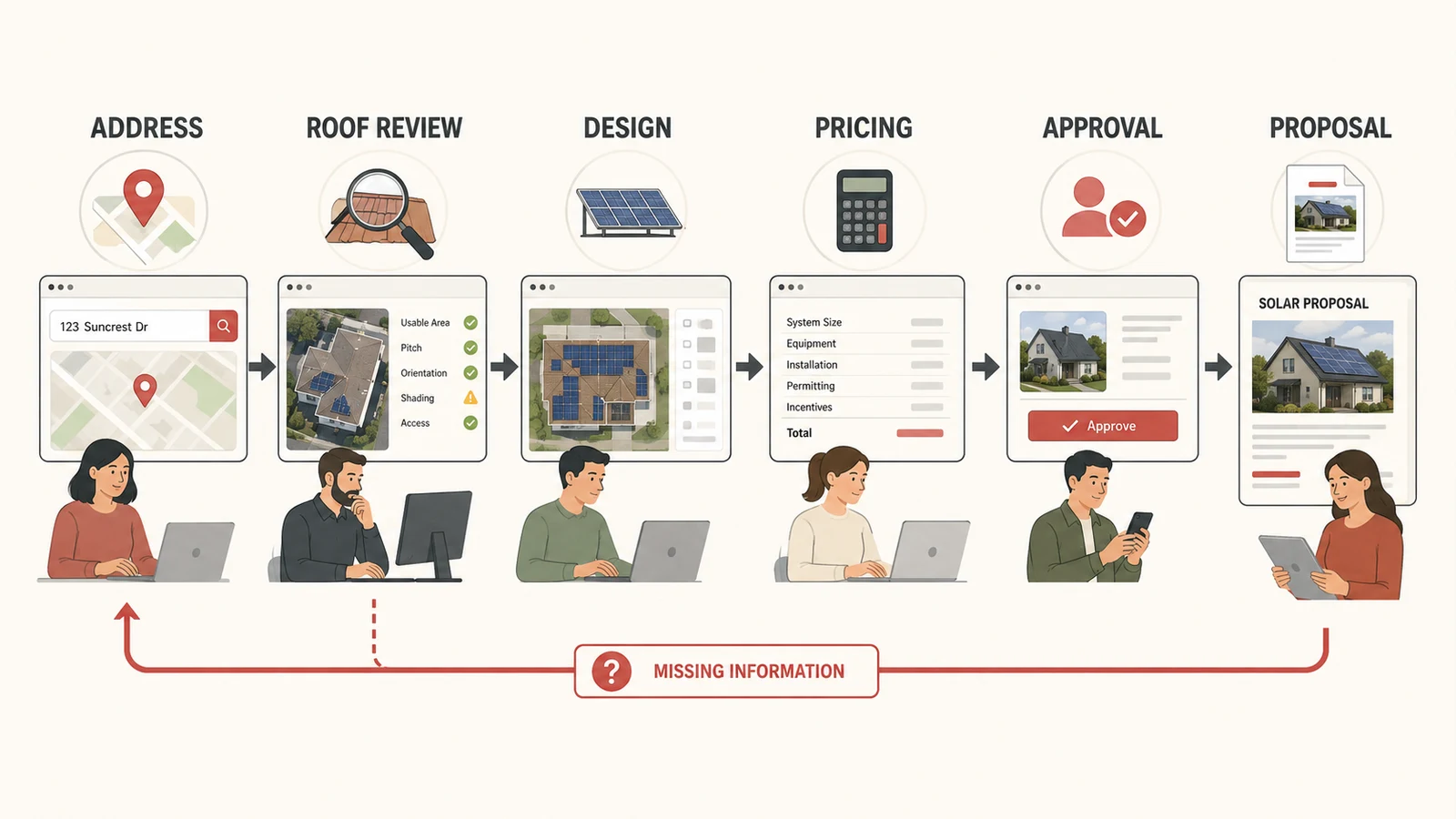
Solar proposal automation connects the work between an enquiry and an approved offer: collecting inputs, assessing the site, preparing a design, applying pricing rules, and assembling the customer document. A useful workflow also makes missing information visible and sends decisions to the person responsible for checking them.
For an installer, the first question is where quoting repeatedly stops. If the delay comes from transferring information between tools, integration may solve it. If every quote depends on undocumented judgement, the process needs clearer rules before more of it can run automatically.

Start with the information a quote actually needs
Choose one common project type and work backwards from an accepted proposal. Identify the information that must be available before each decision, and the person who confirms it.
For a typical rooftop opportunity, that might include:
- The property address and the customer's relationship to the site.
- Electricity consumption information and the period it covers.
- Roof characteristics, available imagery, and survey findings.
- The customer's objectives, including any interest in storage.
- Equipment choices and the approved price list.
- Installation assumptions, exclusions, and approval requirements.
Assign a source and an owner to each field. An electricity figure transcribed from a bill should retain a reference to that bill. A sales estimate should remain visibly different from a verified measurement.
“Unknown” is a useful value. If the workflow fills gaps with plausible guesses, reviewers must spend time discovering which apparently complete fields cannot be trusted.
Use rooftop data to prepare the next decision
Remote information can help a team understand a roof before arranging a visit. Google's Solar API, for example, provides building insights and solar data layers; its documentation also directs users to country coverage and describes restrictions affecting EEA customers. Check the applicable coverage and terms when selecting a data source. Google Solar API overview.
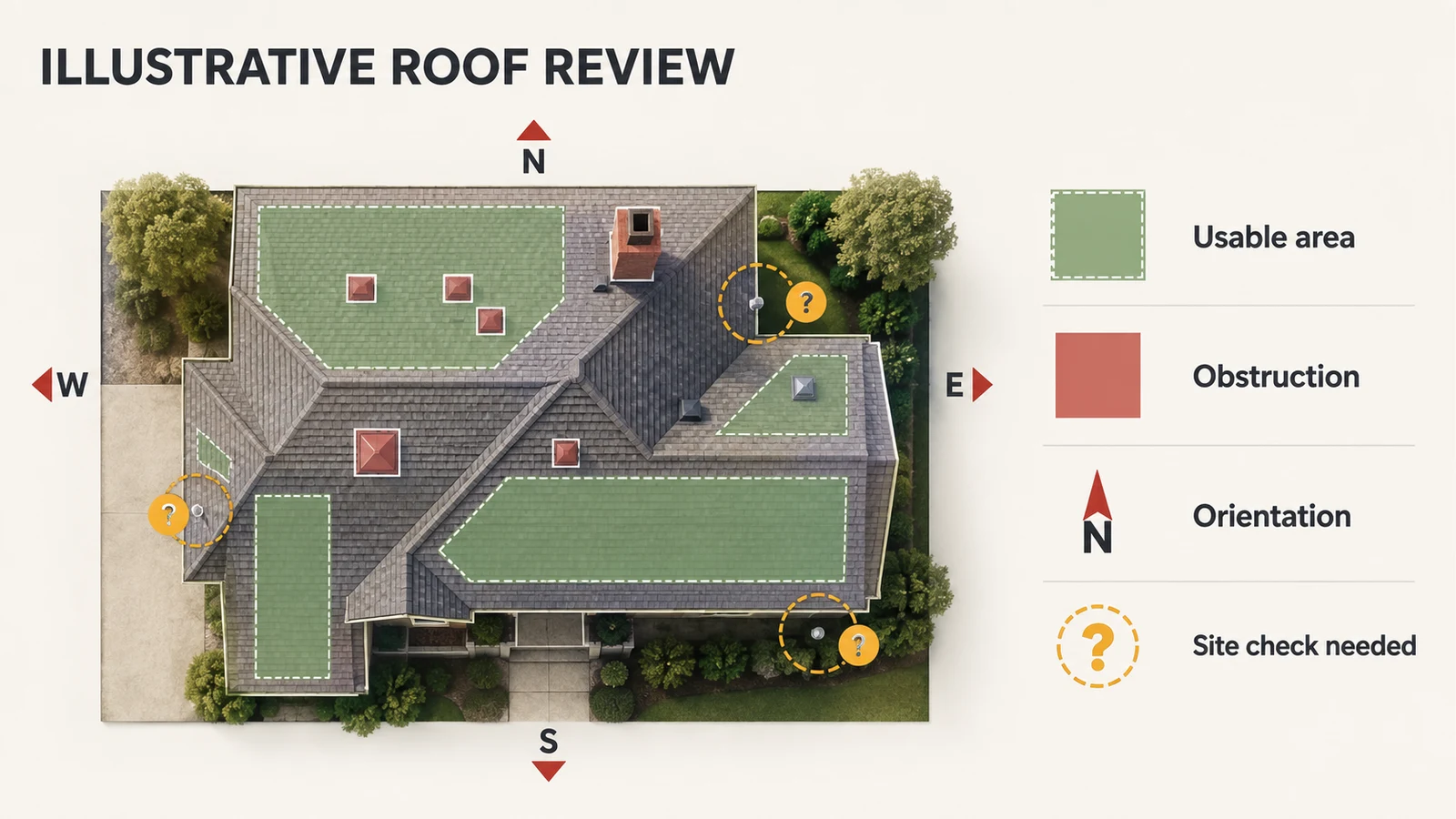
Within the quoting workflow, record what the available information establishes and what still needs checking. Roof geometry, visible obstructions, imagery date, and unresolved site questions belong in the project record, rather than disappearing into a designer's notes.
Consider a fictional enquiry for a building with a partly obscured roof extension. The workflow could assemble an initial proposal draft while marking that section as unverified. It should then request the missing information or route the project for a survey before the relevant design assumption is approved.
This keeps sales moving without allowing a preliminary assessment to become an apparently confirmed site fact.
Make calculations and pricing reproducible
Separate document writing from the rules that determine the offer. Equipment quantities, labour allowances, discounts, tax treatment, and commercial exclusions need controlled inputs and an agreed calculation method.
AI can help extract information or draft an explanation. A reviewer should still be able to reproduce a quoted total from the approved design and pricing inputs. Capture which price-list version and assumptions produced each proposal.
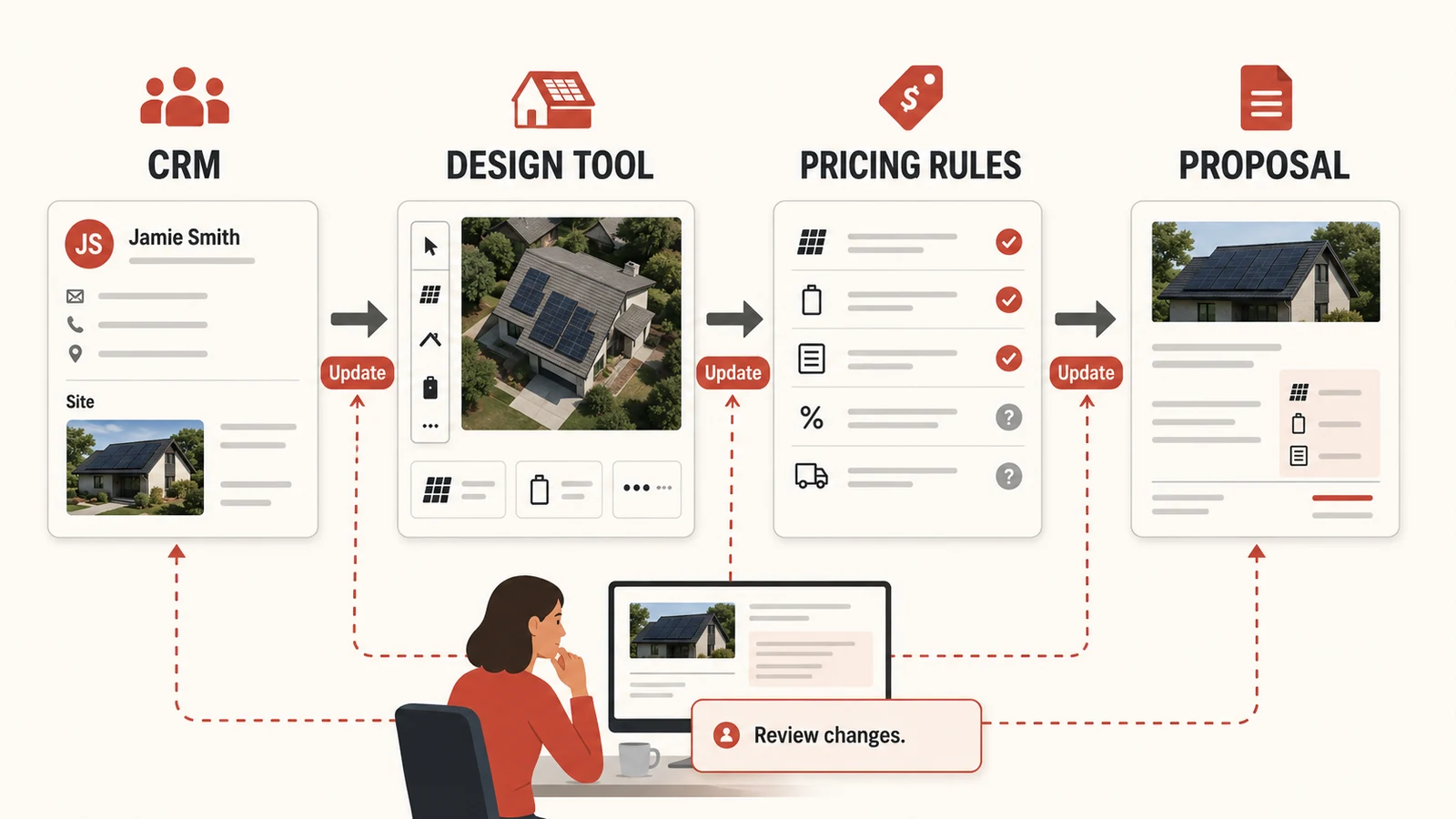
Ask what happens when an input changes. If a battery is added, which calculations run again? If equipment becomes unavailable, who approves the replacement? If a salesperson changes a discount, does the quote return for approval?
These rules prevent a common problem: one part of a proposal updates while its summary or attachments continue to describe the earlier option.
Connect the CRM, design tool, and proposal output
Give each project a stable identifier across systems. Decide which system owns customer information, which owns the design, and where the approved commercial offer is stored.
Solar software may already support parts of this connection. Aurora describes APIs for linking solar project workflows with CRM and ERP systems, and its proposal documentation associates proposal generation with designs and templates. Assess the capabilities available in your particular setup before commissioning a duplicate feature. Aurora API, Aurora proposal documentation.
A practical integration needs more than a successful transfer. It must handle retries, duplicate events, changed records, and rejected updates. If the design tool is unavailable, the project should show a clear pending state. If a transfer fails, someone should receive enough information to resolve it.
Our CRM automation guide explains why clean records and clear ownership matter before automating follow-up.
Put approval at the point where it changes the outcome
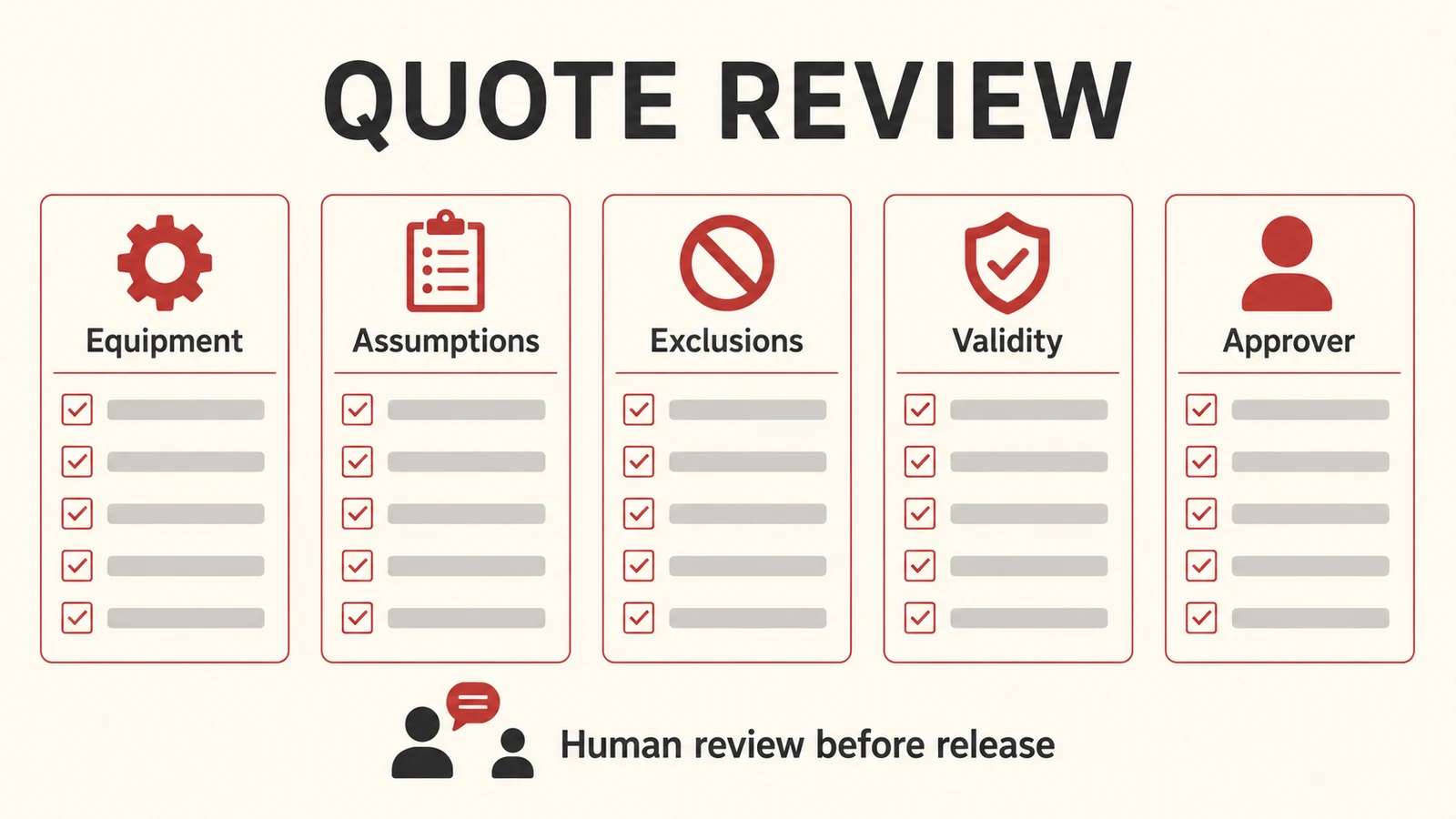
Approval should expose the information needed to make a decision. A reviewer should not have to reconstruct the project from emails to understand why an offer needs attention.
Use a compact review covering:
| Check | What the reviewer needs to see |
|---|---|
| Site assumptions | Verified information and unresolved survey questions |
| Design | Selected configuration and any changes since the previous version |
| Equipment and price | Approved products, price version, and exceptional discounts |
| Customer explanation | Clear assumptions, exclusions, and option descriptions |
| Release | Named approver, approval time, and the exact document version |
A material change after approval should trigger the relevant checks again. Keep earlier versions available so the team can understand what the customer received and why a later offer differs.
Prove the workflow with ordinary and awkward projects
Test a sample that includes incomplete enquiries, revised designs, equipment substitutions, and duplicate customer records. A workflow that works only for a perfectly prepared project will leave the difficult work untouched.
Measure preparation time, reviewer correction time, missing-input frequency, and the number of proposals returned for rework. Keep active work separate from time spent waiting for a customer or survey. That distinction helps identify whether the next improvement belongs in software, staffing, or the intake process.
Common questions
Can we keep our existing solar software?
Often the first step is to connect the tools you already use. Check data access, supported integrations, and ownership of each project field before deciding whether a custom application is needed.
Can the customer receive a proposal automatically?
Set a release policy around your quoting process. A low-risk, fully checked output may follow a different route from a project with unresolved site conditions or exceptional pricing. Define and test the conditions before enabling automatic release.
Where should we start?
Choose one frequent project type and one recurring bottleneck. Build a controlled path through that work, then expand after the team can demonstrate reliable inputs, manageable exceptions, and useful outputs.
Make your quoting process easier to run
Remova Tech builds solar proposal workflows around the information, calculations, and approvals your team needs. Bring us your current quoting process, and we can help identify the next useful integration.