The UN’s Renewable-Powered AI Data-Centre Goal: What Does It Mean for Solar Developers?
The United Nations has put a simple question to the AI industry: if data centres are part of the energy transition, who will show the evidence and pay for the infrastructure?
Focus
Renewable power for AI infrastructure
Written for
Data-centre developers, solar and storage companies, technology leaders, utilities, and sustainability teams
Editorial standard
Facts, status, and practical implications
At a glance
- The UN Secretary-General called for an AI Environmental Transparency Initiative in July 2026.
- The proposal asks major AI companies to disclose environmental impacts and commit to renewable-powered data centres by 2030.
- The pledge is political direction, not a binding global rule, so measurement and procurement will decide its credibility.
A political call with a very physical consequence
At the High-Level Political Forum in July, the UN Secretary-General called for an AI Environmental Transparency Initiative. The proposal asks major AI companies to publicly disclose the environmental impacts of their systems and commit to powering data centres with renewable energy by 2030. He repeated the message at the World Artificial Intelligence Conference in Shanghai. This is a real development in the conversation around AI, but it is not a global regulation that automatically changes how a data centre buys electricity.
The reason the call matters is that AI growth is showing up in physical infrastructure. Data centres need power, land, cooling, network connections, and reliable operation. A company can sign a renewable contract while the local grid still faces congestion or while the project’s generation arrives at a different time from the data centre’s demand. The pledge therefore opens a harder question: what counts as renewable-powered in practice?
A certificate is not the same as a matching power system
The easiest version of a renewable claim is a certificate or annual accounting match. Those instruments can support clean-energy investment, but they do not necessarily mean that a data centre is drawing renewable electricity every hour. A solar farm may produce strongly at noon while a computing cluster runs through the night. The accounting can be valid under one framework and still leave a local operator managing a difficult evening peak.
That does not make contracts useless. It means the contract, the grid position, the storage plan, and the reporting method should be described separately. Developers can create more credible projects by pairing solar with batteries, arranging time-matched supply, improving forecasting, and publishing the assumptions behind the claim. The more ambitious the promise, the more specific the evidence needs to be.
Where solar and storage can help
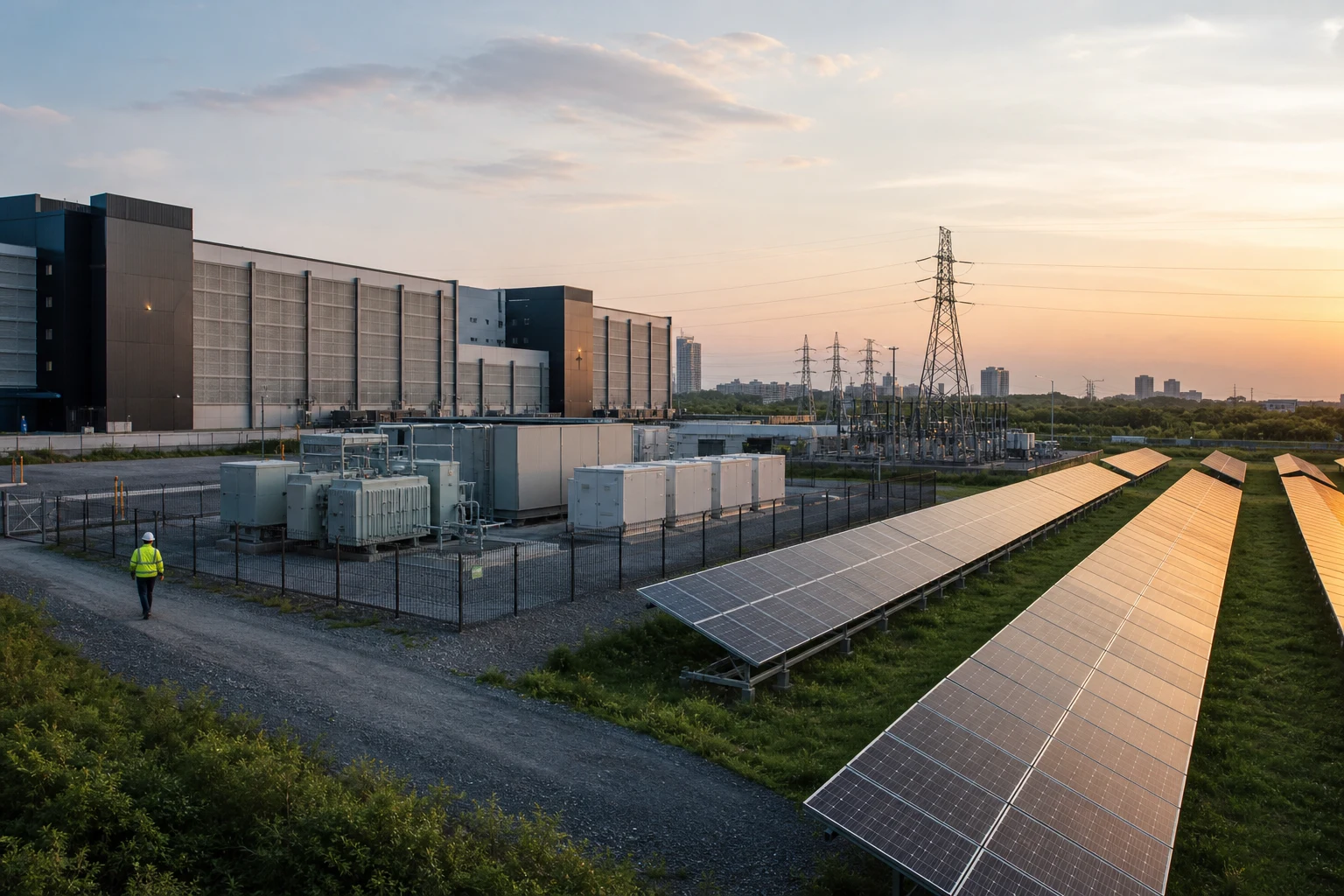
Solar is a natural part of the answer because data-centre demand is growing at the same time as solar deployment. Storage can shift some of that production into the hours when the facility needs power, and flexible computing workloads may create additional room to move. A well-designed project can also use forecasting to plan charging, manage interconnection limits, and reduce the chance that a cloud event creates an unexpected shortfall.
The limits should be stated honestly. Solar and batteries do not remove the need for a strong grid, firm backup, or a connection agreement. A local community may still worry about land and water use. A data-centre operator may still need redundancy that a renewable project cannot provide alone. The value is in designing the whole system rather than treating solar as a label attached to a server contract.
Transparency has to reach the project level
The UN call makes environmental reporting a boardroom issue, but the useful evidence will be operational. Companies should be able to describe electricity use, carbon accounting, water for cooling, land impacts, contracted generation, storage behaviour, and the boundaries of their calculation. Public reporting does not need to reveal sensitive security details. It does need to be consistent enough for customers, regulators, and communities to understand what is being claimed.
AI can help collect and reconcile that evidence, especially when energy, facilities, procurement, and sustainability teams use different systems. It should not be used to manufacture a green narrative from incomplete data. A reporting workflow should show its sources, identify estimates, and flag a missing meter or contract. Automation is valuable here because it can make honesty easier to maintain.
What happens before 2030
The next steps will happen through procurement policies, utility negotiations, local planning decisions, corporate disclosures, and new market products. Solar developers that can offer predictable output, flexible storage, and credible measurement may find a stronger market. Data-centre teams will need to ask whether a project improves the local system or simply moves an accounting line on a sustainability report.
The UN’s proposal is therefore a useful news hook because it connects two fast-moving stories: AI’s appetite for infrastructure and renewable energy’s need for flexible demand. The opportunity is real, but the standard should be higher than “we bought certificates.” The question is whether the power system, the contract, and the disclosure all tell the same story.
That evidence will need a time boundary as well as a carbon label. A project can be renewable on an annual balance and still depend on fossil generation during the hours when the data centre is busiest. Buyers should ask for the matching period, the geographic boundary, the treatment of storage losses, and the plan for grid congestion. Clear answers do not make every project perfect; they make the trade-off visible enough for a board, a regulator, or a community to judge.
Sources and status
This is news analysis, not legal or financial advice. Proposals, forecasts, draft standards, and company statements can change. Check the linked primary sources and the publication date before relying on a detail.
From news to useful action
Need to make an energy workflow easier to run?
Remova Tech helps teams review opportunities, connect reliable data, and introduce automation with clear ownership and human control.